
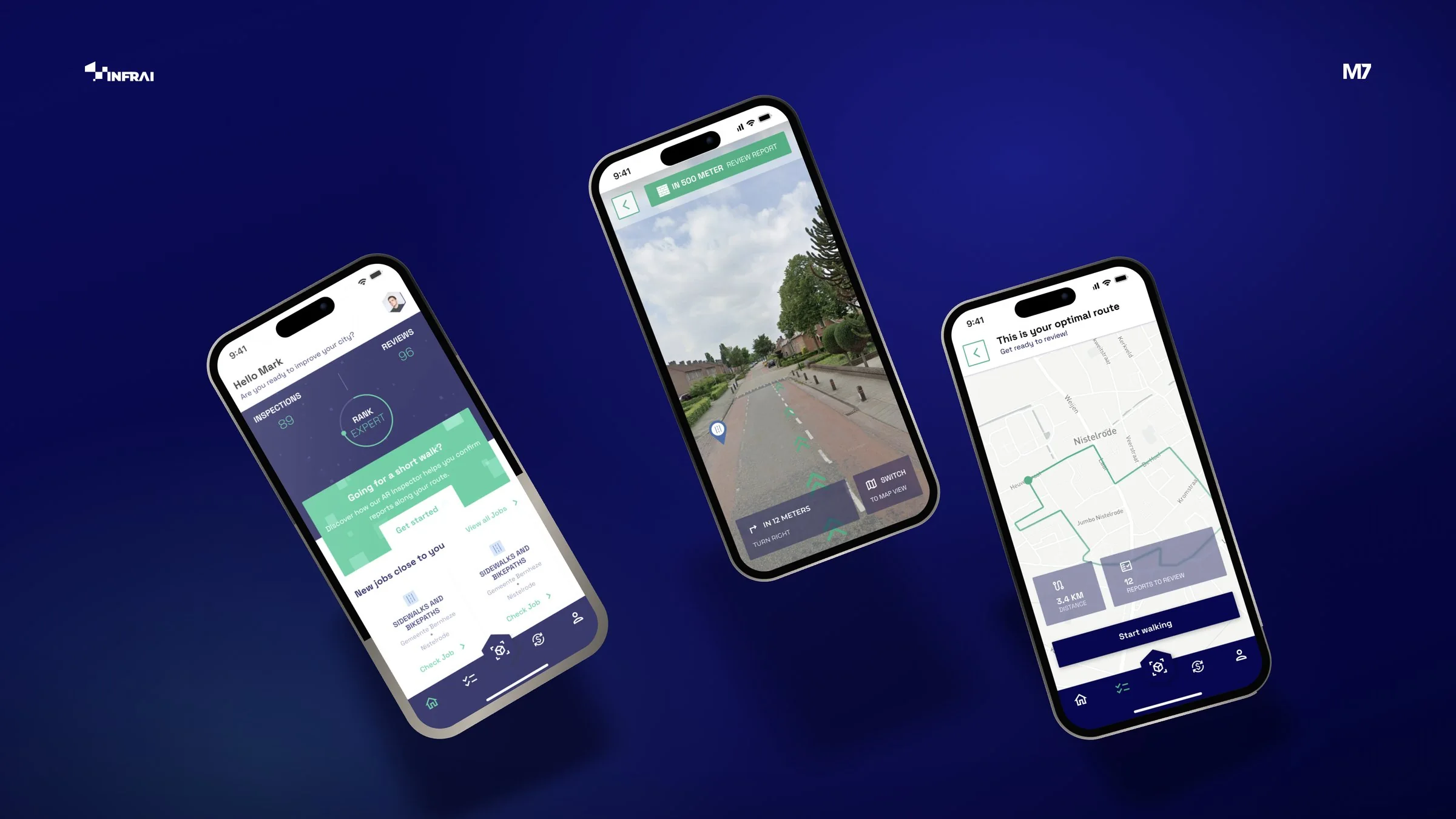








Good products do not start with features, but with people. With interviews, observation and data we discover how your users work, where they get stuck and what they need. So you build something people are actually waiting for.
Talking, watching and measuring
We combine qualitative and quantitative research. In interviews and on-site observation we hear the story behind the behaviour. With analytics, heatmaps and session recordings we see what people do in practice. Together they give an honest picture, because what people say and what they do is not always the same.
Insights your team can act on
We translate the results into practical assets: personas or user profiles, a customer journey with pain points and opportunities, and a list of design and product recommendations. We carry them into the design, the user stories and the roadmap. For us, research is not a standalone report, but the starting point of the design.
Why it works
Why it works.
Fewer assumptions
You build on what users actually do.
Less waste
No features nobody uses.
Shared picture
Team and stakeholders look at the same user.
Tools & platforms
Isn't UX research too expensive for a smaller project?
Research scales with the project. Sometimes it is an extensive programme with many interviews, sometimes a few interviews and an afternoon in Hotjar. Even a small dose of research often prevents costly changes afterwards.
Who do you talk to?
With your real (or intended) users: customers, employees, members or partners. You often help us with the first contacts; we take care of the planning, the interviews and the processing.
What is the difference between UX research and user testing?
UX research is mainly about understanding: who are your users and what do they need? User testing checks a concrete design or product: can people complete their task? Research usually comes first, testing follows as soon as there is something to test.
Today may be the day to meet your strategic partner.




 Martijn, Noud and the rest of the team are ready for you.