






From baker, butcher and food producer to retail chain, concept store and web shop: we make sure your product looks as good online as it does in the display case, and that ordering takes just a few clicks.






















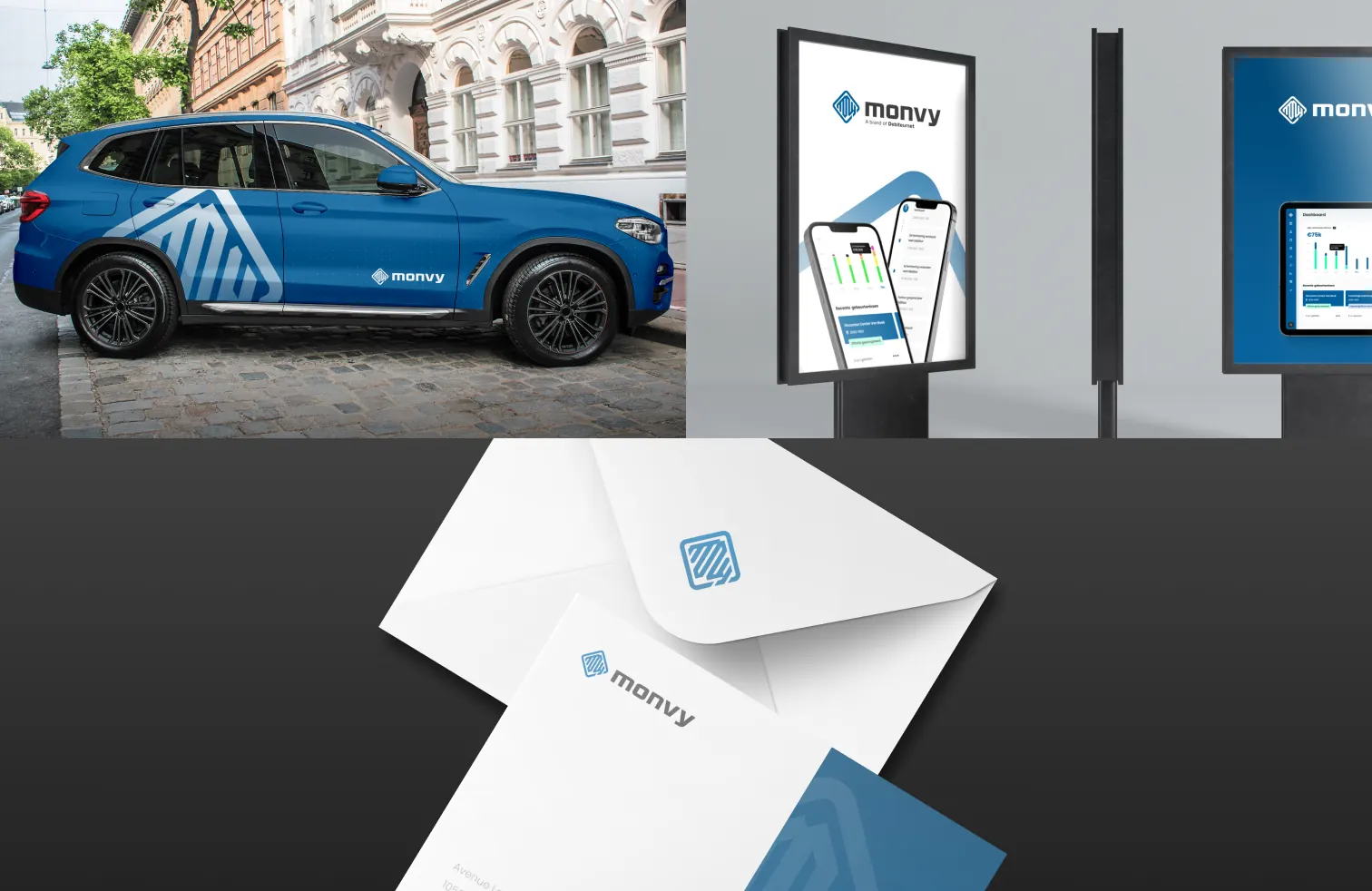
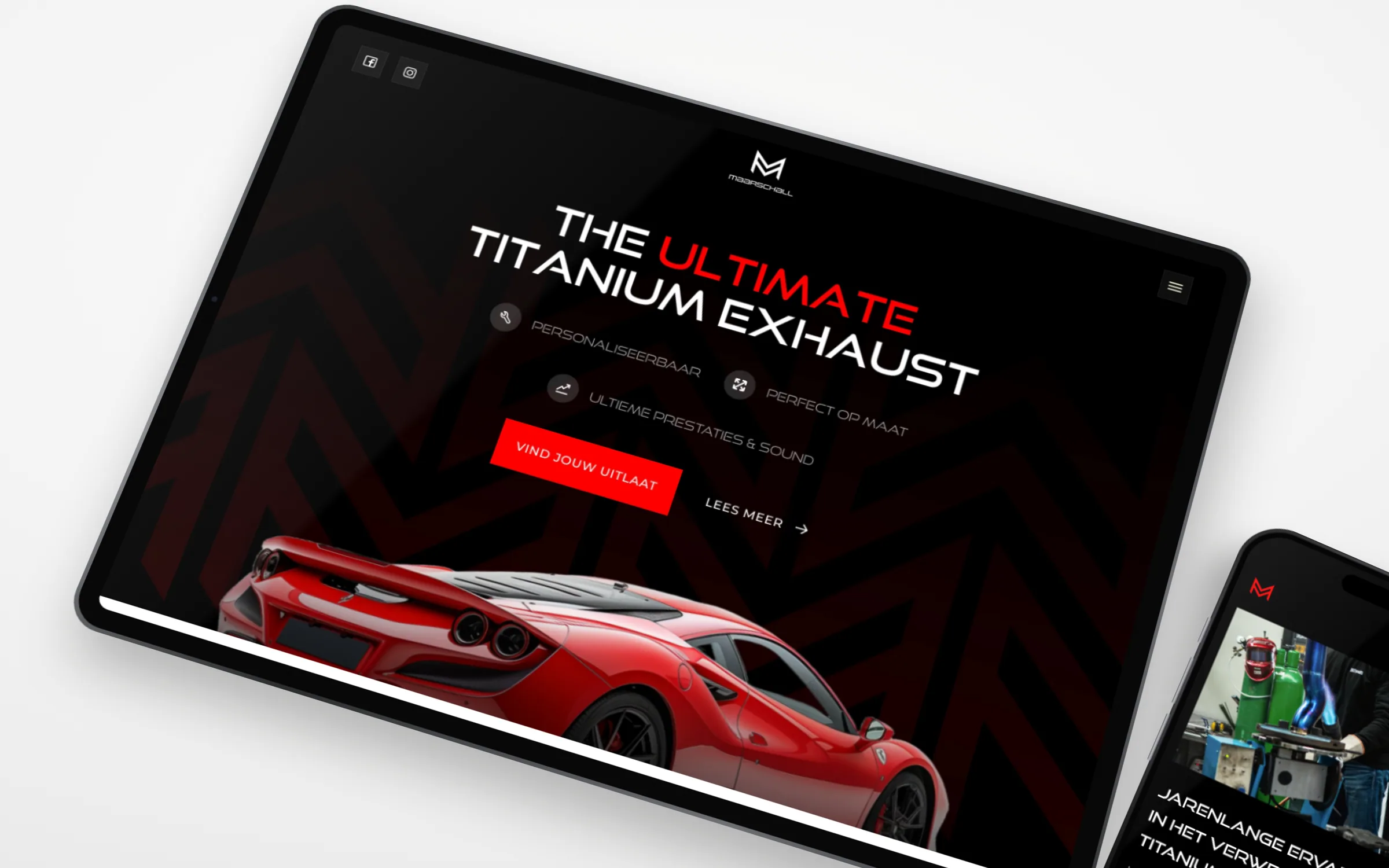
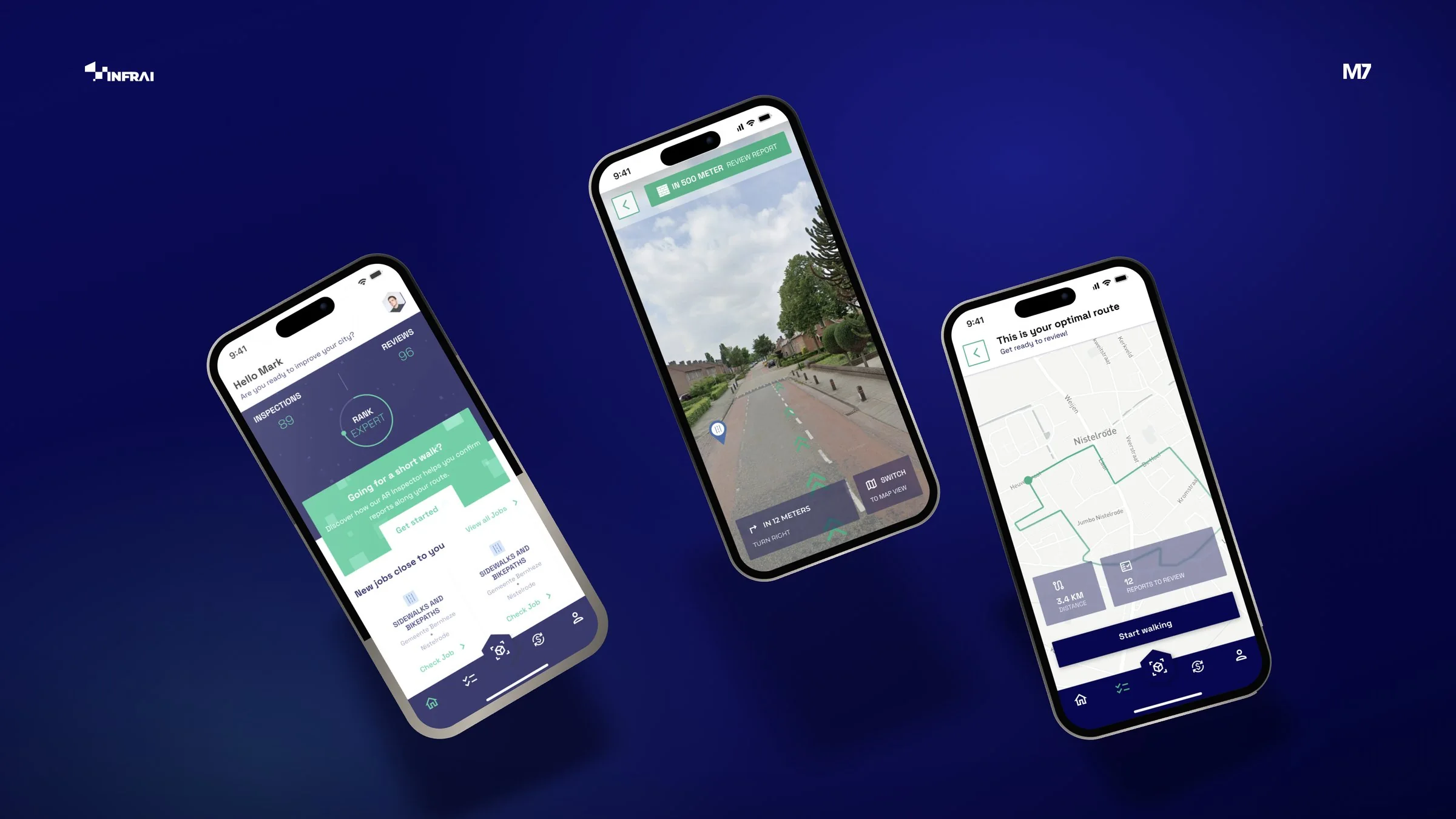
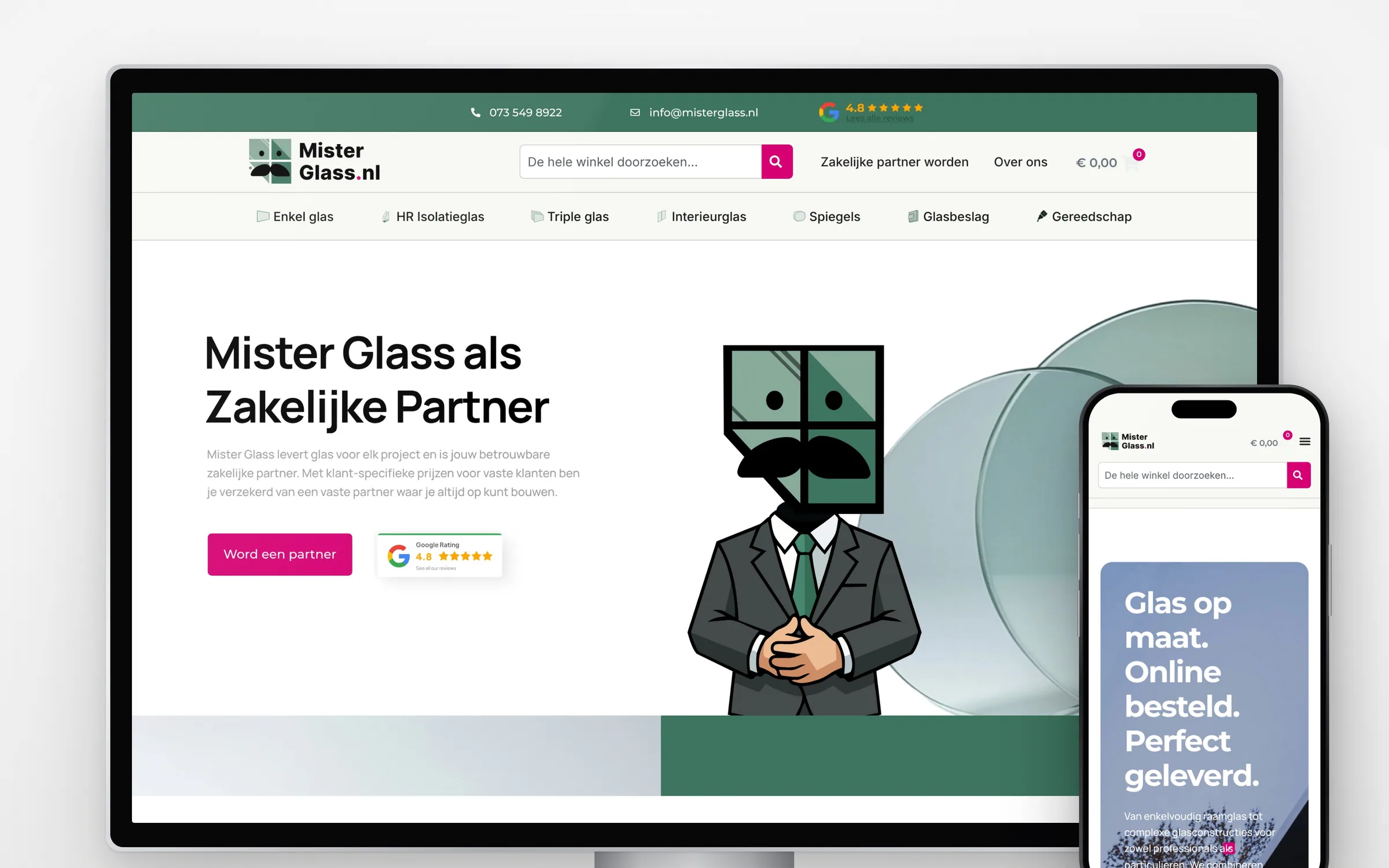
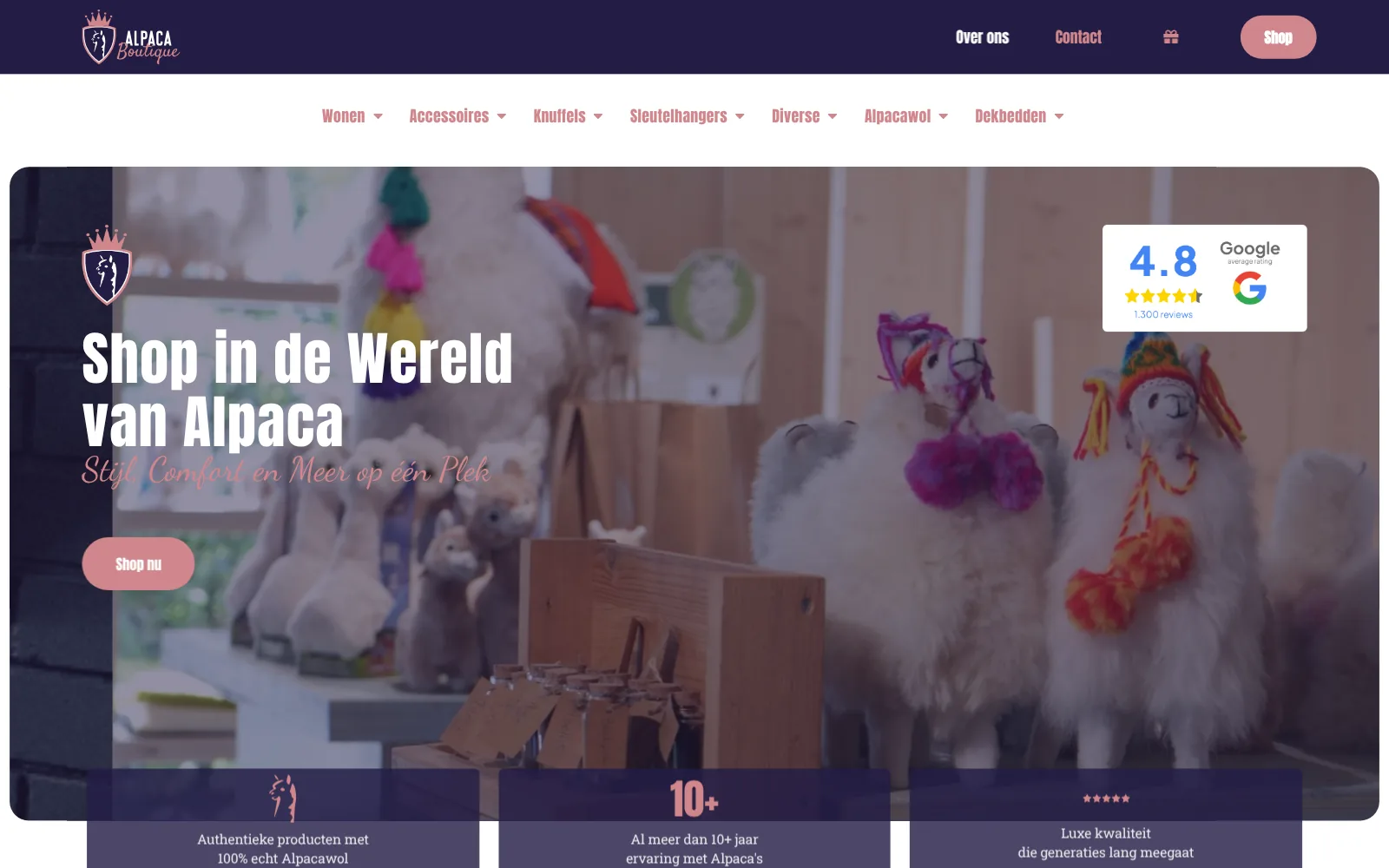
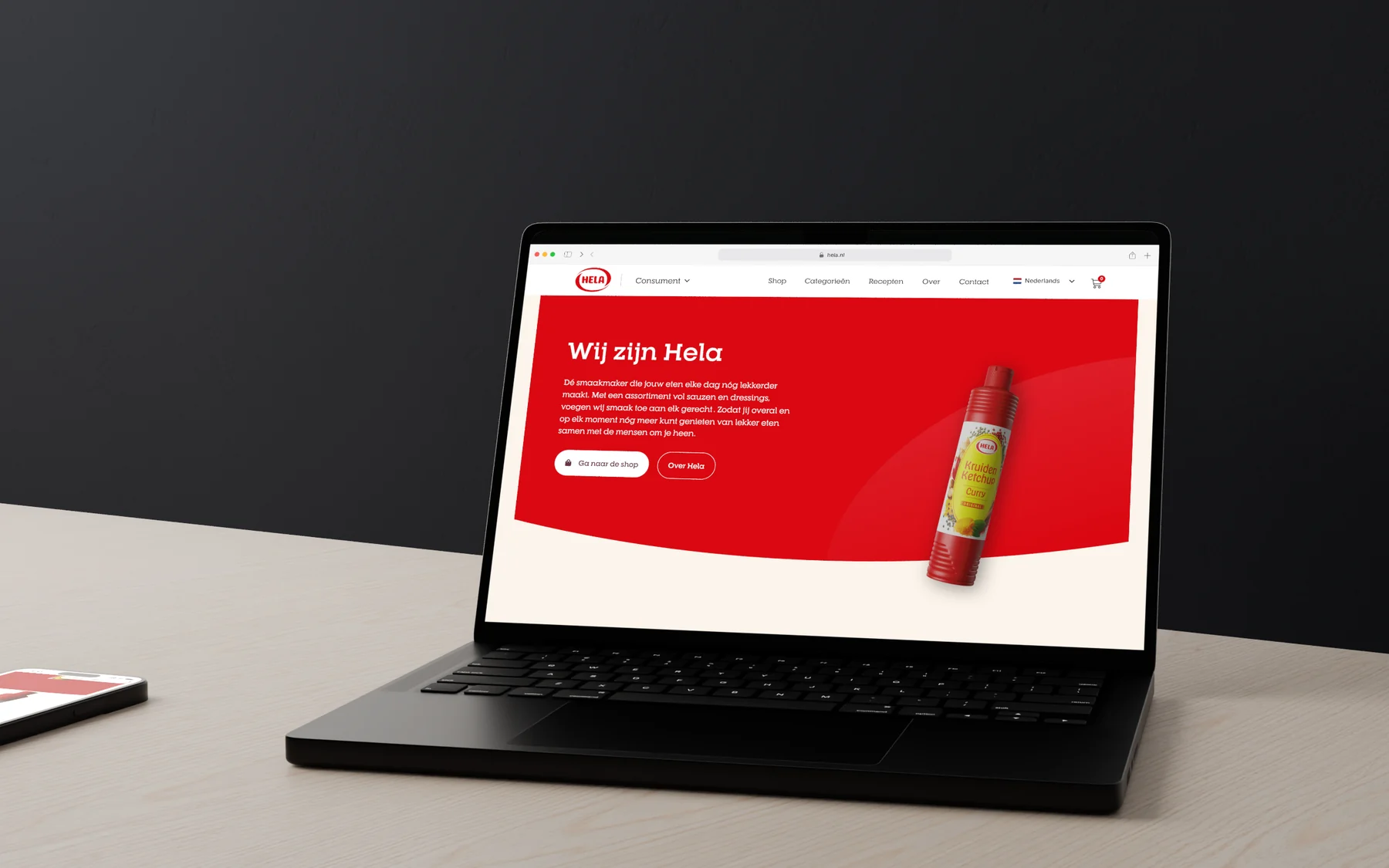
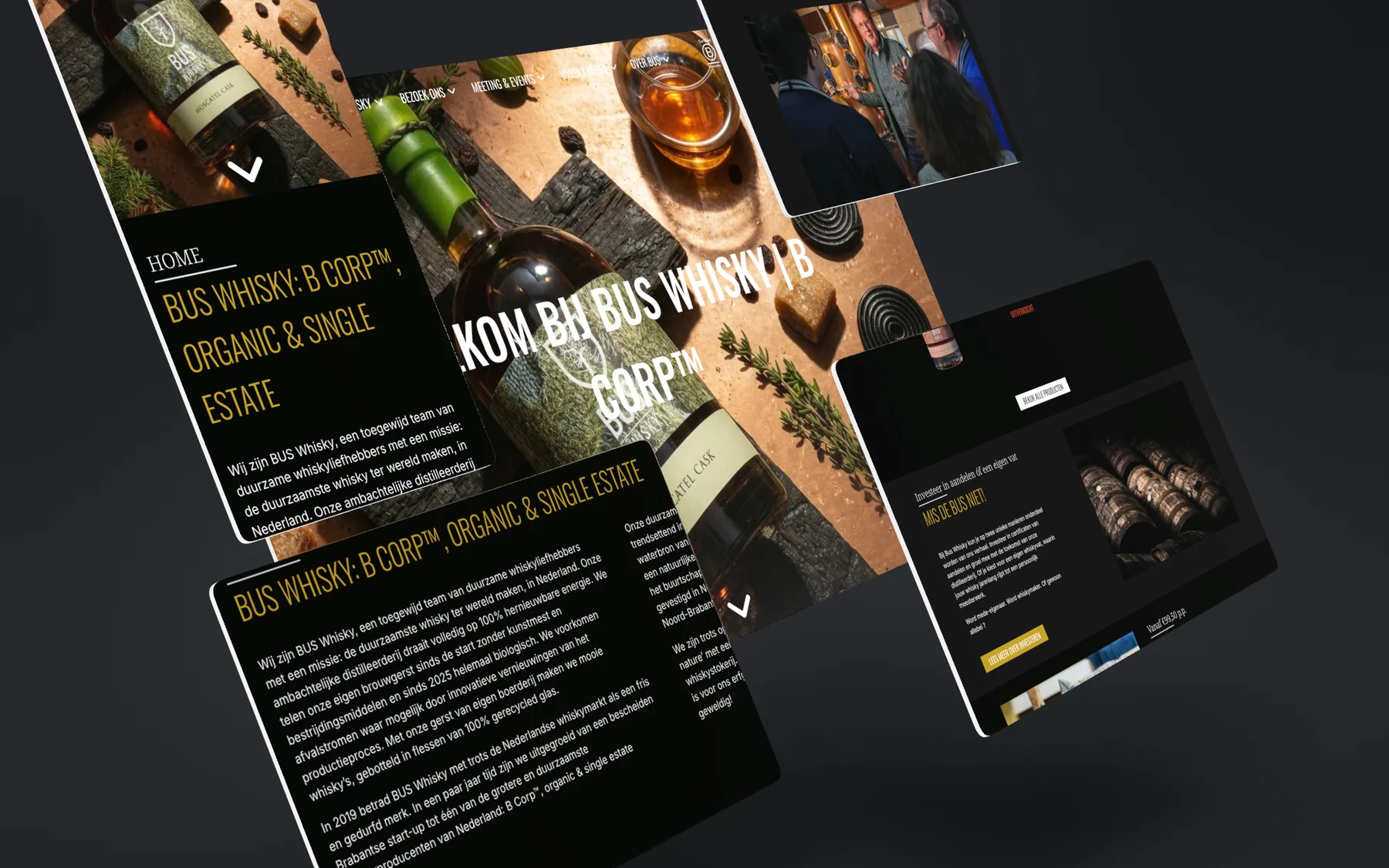
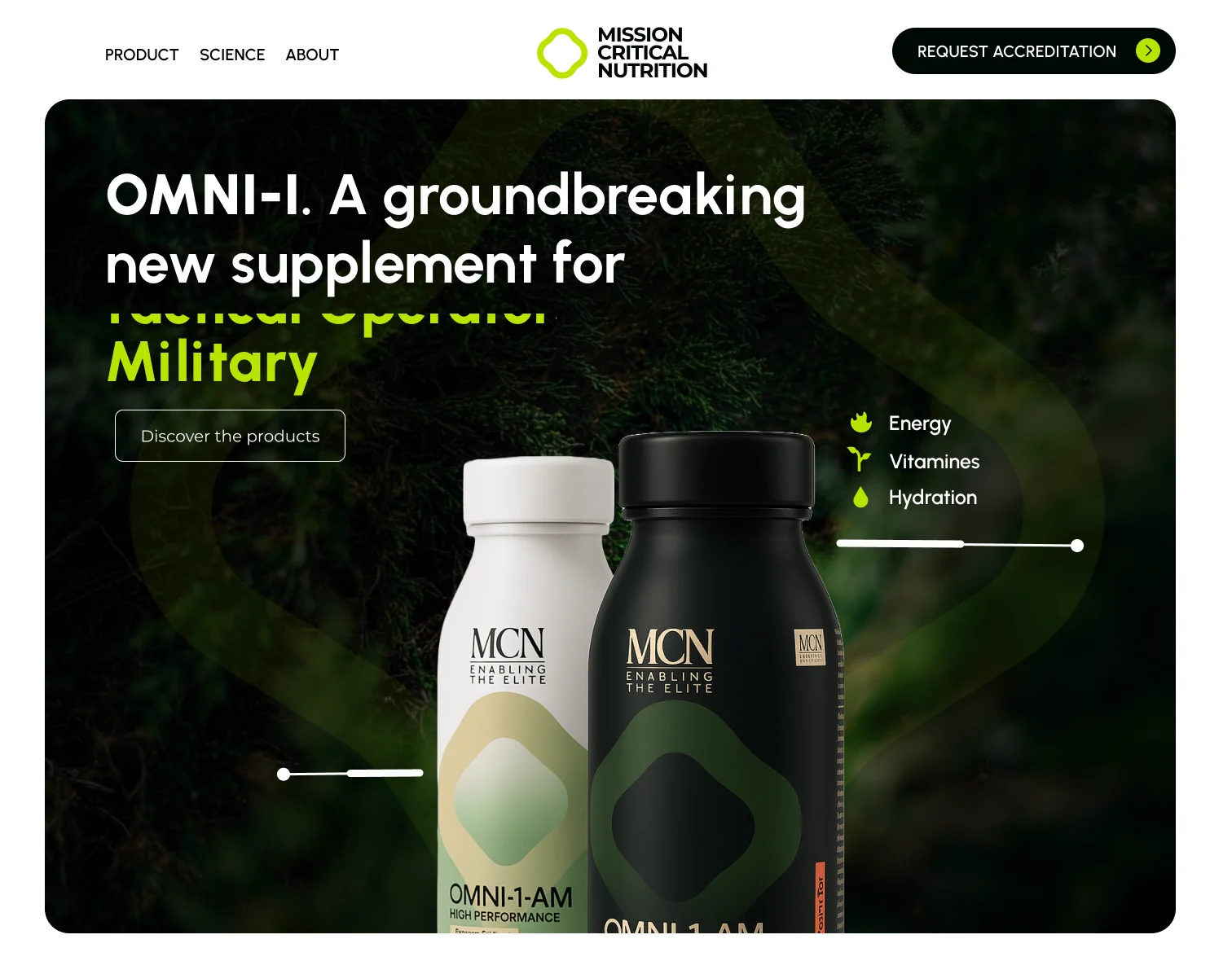
In food and retail, people buy with their eyes, and often with their stomach too. A photo of a fresh cake, packaging that stands out or a shop window with character: the choice is made in seconds. M7 builds brands, packaging, websites and web shops that seize that moment, from a visual identity for an artisan bakery and a label for a new food startup to a web shop for made-to-measure glass and a repair shop with online appointments.
We look beyond pretty. With ordering ahead and collection, a quote calculator for catering or a configurator for custom work, you make buying easy. Product photography and short video show what you sell, local SEO makes sure the neighbourhood finds you, and with Google Ads, Meta Ads and email marketing you bring customers in and back again. From one shop to a chain with branches, and from food truck to wholesaler.
Challenges in this sector
What we often see.
Standing out on shelf and screen
Customers compare in seconds, in store and online. A recognisable brand, packaging that stands out and good product images make the difference between walking on and buying.
Ordering should be simple
Ordering ahead, collection, delivery or custom work: if it is complicated online, customers pick up the phone or give up. With a smart web shop, calculator or configurator, ordering takes a few clicks.
Getting found nearby
Many food businesses and shops run on their neighbourhood. With local SEO and a well-kept Google Business Profile you are visible when someone searches for 'bakery near me' or 'gift shop in Oss'.
Bringing customers back
A first purchase is nice, a regular customer is better. With email, social and smart offers you stay top of mind between visits or orders.
Projects
Work we're proud of
Relevant services
How we help
Popular applications
Frequently asked questions
Frequently asked
Do you work for small food businesses as well as larger retailers?
Yes. From an artisan baker or butcher with one shop to food producers, retail chains and web shops with thousands of products. For an independent shop we often start small, with a visual identity, a clear website and a solid Google Business Profile. Larger retailers we help with web shops, integrations, campaigns and brand guidelines for every location. We tailor the approach and budget to where you are now, and build it so you can easily expand later.
Which platform is best for my web shop?
It depends on your product range, growth plans and existing systems. Shopify is strong on ease of use and rapid growth, WooCommerce offers a lot of flexibility and Webflow is ideal for a compact range with a premium brand experience. If you also sell in a physical shop, we check how well your till system connects. We give honest advice on what suits you, even if that means your current web shop is still perfectly fine.
Can you migrate my web shop without losing search visibility?
We migrate carefully, with redirects, keeping the URL structure where possible and technical SEO checks before and after launch. Product data, customer accounts and reviews come along wherever the platform allows it. After the switch we keep a close eye on Search Console and your traffic for a few weeks, so we can adjust quickly. That way your search visibility is preserved as well as possible. Read more under website migration.
Does my web shop need to comply with the European Accessibility Act?
Since June 2025 the accessibility requirements of the European Accessibility Act apply to many web shops; microenterprises are largely exempt. If you are unsure whether it applies to you, check with your trade association or a legal adviser. We build and improve web shops with accessibility as a starting point, such as sufficient contrast, keyboard navigation, clear forms and alt text on product photos. Rules aside, it makes ordering easier for everyone.
Do you also handle marketing for my shop or web shop?
Yes. From Google Shopping and Meta Ads to email flows, social media and local SEO: we drive a flow of visitors and keep customers engaged after their first purchase. For a food business or shop the focus is often on the neighbourhood and returning customers, for a web shop on the return per campaign. We start with proper tracking, so you can see what every euro delivers. Then we shift budget to what works, with Google Ads and email marketing.
For food producers, food startups, regional producers, coffee roasters, breweries, distilleries and food wholesalers who want their product to stand out on the shelf, in hospitality and online. Everything for food producers & brands
How do you design packaging that stands out on the shelf?
Start with the second in which someone walks past the shelf. What should they see? Usually one thing: what it is and why it is different. A clear brand name, a strong colour or shape and a calm back do more than ten claims on the front. In the packaging design we neatly make room for the mandatory information, such as ingredients, allergens and shelf life. You supply the correct content or have it checked. We make sure it is legible and fits.
How do you get your food product into shops and restaurants?
Buyers are offered lots of new products and have little time. Help them with a short sales presentation or product sheet: what it is, who it is for, what the margin and shelf life are, and how it fits their range. Good product photography and a sample pack that looks well cared for do the rest. We make that presentation in your own style, so you can adapt it yourself for each meeting. We cannot promise you a spot on the shelf, but we can promise a strong story at the table.
Can restaurants and shops order from us online?
Yes, and for many producers and wholesalers it saves a lot of email and phone calls. In a B2B web shop a regular customer logs in and sees their own prices, volume discounts and delivery days. Last week's order is repeated in a few clicks. With integrations to your ERP, such as Exact, AFAS or Odoo, orders and stock end up in the right place automatically. It does not have to look dull, but above all it has to be fast.
How do you tell the story of your brewery or coffee roastery?
Show what happens behind the door. Roasting, brewing or ageing is often the most beautiful thing you have, and it is exactly what customers never see. A short company film and honest photos of your people and process make your brand tangible, on your website, at a tasting and on social. A visual identity that suits your character holds everything together, from label to beer mat. Alcohol comes with extra advertising rules, such as the Dutch advertising code for alcoholic beverages. We take those into account together.
How can a food producer also sell directly to consumers?
With a web shop of your own alongside your sales through shops and restaurants. That gives you margin, direct feedback and a bond with your fans. Do mind your retailers: keep your prices in line and offer online mainly what is hard to find in store, such as larger packs, gift boxes or a subscription. With email flows around new flavours and seasons you then keep those customers.
How do you tell consumers where your product is sold?
With a stockist map on your website, which you update yourself when a shop or restaurant is added. Visitors enter their postcode and see the nearest address. That kind of widget helps your retailers too, because you send customers to their door. Announce new stockists on social and in your newsletter as well, so the news is not only on the map.
What do you need for a good food photo shoot?
A clear list: which products, which images for which purpose and which mood. Packshots on white for retailers and your web shop need a different approach from lifestyle shots at the table or outdoors. Styling and fresh ingredients make the difference, and a fixed lighting set-up makes your range look like one family. With product photography one day often gives you images for months, also for new variants later.
For bakeries, butchers, delis, cheese shops, supermarkets and other food shops that want to bring the neighbourhood through the door, from artisan baker to independent supermarket owner. Everything for bakers, butchers & food shops
Can customers order online and collect from my bakery or butcher shop?
Yes. Customers choose their products, a pick-up day and a time slot, and pay in advance by iDEAL. You set the rules: how late you accept orders for tomorrow, how many orders fit in each slot and which products are only available on certain days. Every morning you have an overview of what needs to be ready. Around the holidays such a web shop saves a lot of queues and full voicemails. With a few automatic emails the customer knows exactly when to come by.
How does a baker or butcher get found more easily locally?
Mainly through Google Maps and your Google Business Profile. Make sure your opening hours are right, including holidays, add fresh photos regularly and reply to reviews, including that one critical one. On your website, a page per speciality helps, such as 'order a cake', 'barbecue package' or 'cheese board', with your town name added. With local SEO you match how people really search: 'bakery near me' or 'butcher in Uden'. Then you are visible exactly when someone gets hungry.
What does a new visual identity do for a bakery or food shop?
Above all recognition and calm. A good visual identity makes your shopfront, bread bags, price tags, delivery van and Instagram feel like one business. That makes you recognisable in the street and familiar online. It helps your pricing too: a well-kept shop comes across as artisan rather than cheap. We keep it practical, with files your printer and packaging supplier can use straight away. And we take your craftsmanship as the starting point, not the latest trend.
How does an independent supermarket approach online marketing?
Locally and with a steady rhythm. If you operate under a franchise formula, it often handles the national campaigns, but you are best placed to reach the neighbourhood yourself. Think of a weekly newsletter with your own offers, posts about local products and the people behind the counter, and a Google Business Profile that is always correct. With email marketing and social media in a fixed weekly schedule, it becomes a habit instead of an extra chore. Within your formula's house rules, of course. Fully independent? Then you have even more room for a face of your own.
Does a digital loyalty card work for a bakery or butcher?
Often, yes, as long as it stays simple. A customer at the till does not want to download an app and create an account first. A pass in their phone's wallet or a loyalty scheme linked to your till system works more smoothly. With a digital loyalty card you reward regulars and also know who they are, so you can, for example, remind them of the Christmas order in good time.
What should a bakery, butcher or deli website include?
Mainly what customers want to know before they come: opening hours, including holidays, your range and specialities, the ordering service and where to park. Also mention how customers can get allergen information. Real photos of your shop and your people do more than stock images of croissants. A website you update yourself makes it easy to put the weekly offer or the Christmas range online quickly.
How do you show your craft on social media?
By taking people behind the counter. The first loaf out of the oven, the butcher tying a roast or the cheesemonger cutting a wheel: those are images nobody scrolls past. Short videos of a few seconds are enough, filmed on a phone in good light. With a steady rhythm, for example twice a week, it becomes a habit instead of an extra chore.
For food trucks, caterers, corporate caterers and meal services that want to fill their calendar with weddings, festivals, company parties and regular business clients. Everything for food trucks & catering
How does a food truck get more bookings for parties and events?
Make booking as easy as ordering at your hatch. A website with your concept, photos from previous events, the area you cover and a price estimate per number of guests already answers the first questions. Show which dates are already taken too; that saves emails about a Saturday that went long ago. On top of that, social video works well: a few seconds of a sizzling grill says more than a menu. And ask for a review after every party.
What should a caterer's website include?
Everything an organiser needs to request a quote. Your packages with what is included, for how many people, a price estimate and the options for dietary requirements and allergies. Photos of real buffets and events, ideally at venues people recognise. And an enquiry form that asks for date, number of guests, venue and budget, so you can write a good quote in one go. A website you update yourself makes it easy to put a new seasonal menu online quickly.
How does my food truck stand out from the rest at a festival?
At a festival, ten trucks may stand side by side and a visitor decides from twenty metres away. At that point it has to be clear at a glance what you sell. A short name, a strong colour and a menu board with five dishes instead of fifteen work better than a truck covered in text. We design the vehicle graphics, menu board, clothing and social templates from one visual identity. That way people recognise you on Instagram too, and next year on the same field.
How do you win regular corporate catering clients?
Business clients choose on reliability: does it arrive on time, is the invoice right and can it be done for sixty people with three dietary requirements? Show that with a separate page for businesses, with lunch and drinks packages, delivery times and a fixed contact person. Reach office managers with LinkedIn Ads in your region, and keep existing clients engaged with a short newsletter around the moments that matter, such as the Christmas drinks or the summer barbecue. A first trial lunch can break the ice.
How does a caterer or food truck get found in its region?
Organisers often search for a combination of occasion and place: 'company party catering Den Bosch' or 'food truck hire Eindhoven'. A page per type of event and per region, with photos of previous jobs nearby, matches that. A complete Google Business Profile with reviews matters too. With local SEO you get found by people within your own service area, not by someone who lives just too far away.
How do you keep track when enquiries come pouring in?
Have every enquiry come in in the same place, with date, number of guests, venue and menu already filled in. In a simple planning overview you see which dates are full, what is confirmed and who needs to work. With automatic confirmations and reminders the customer knows where they stand too. That way you avoid double bookings on that one busy Saturday in June.
How do you ask for reviews after an event, and what do you do with them?
Ask the day after the party, while the memory is fresh, with a direct link to your Google profile. A short automatic email takes care of it, so you do not forget in the rush of the season. Put the best reviews on your website, next to the package they are about. An organiser who is hesitating would rather read what another couple says than what you say about yourself.
For independent shopkeepers, retail chains, franchise formats, concept stores and service shops such as repair shops, who want their physical store and online channel to work together. Everything for shops & concept stores
How do you combine a physical store with online sales?
By treating them as one shop. Show online what is in stock at which store, offer click & collect or reservations, and make in-store returns possible. Customers often research online and buy in the store, or the other way round. A web shop connected to your point-of-sale system keeps stock and prices in sync, so you do not run two sets of books. And your store staff can see online orders too, so everyone tells the same story.
How do you get more people into your store through Google?
With a complete Google Business Profile for each location: opening hours that are correct, including holidays, up-to-date photos, reviews with replies and your products listed. Plus a dedicated page per store on your website with address, directions, parking and what you can specifically do there. With local SEO you appear for searches like 'bike shop near me' or a product name plus your town. For chains we set that up neatly for all locations at once.
How do you translate the feel of a concept store to online?
A concept store sells a feeling, not just products. That feeling lives in the selection, the interior and the story behind the brands you choose. Online, you translate it with atmospheric photos of your store, short stories with your products and a calm web shop that feels more like a magazine than a catalogue. With a strong visual identity and good product photography your site feels like an extension of the store. And invite online visitors to events in the shop.
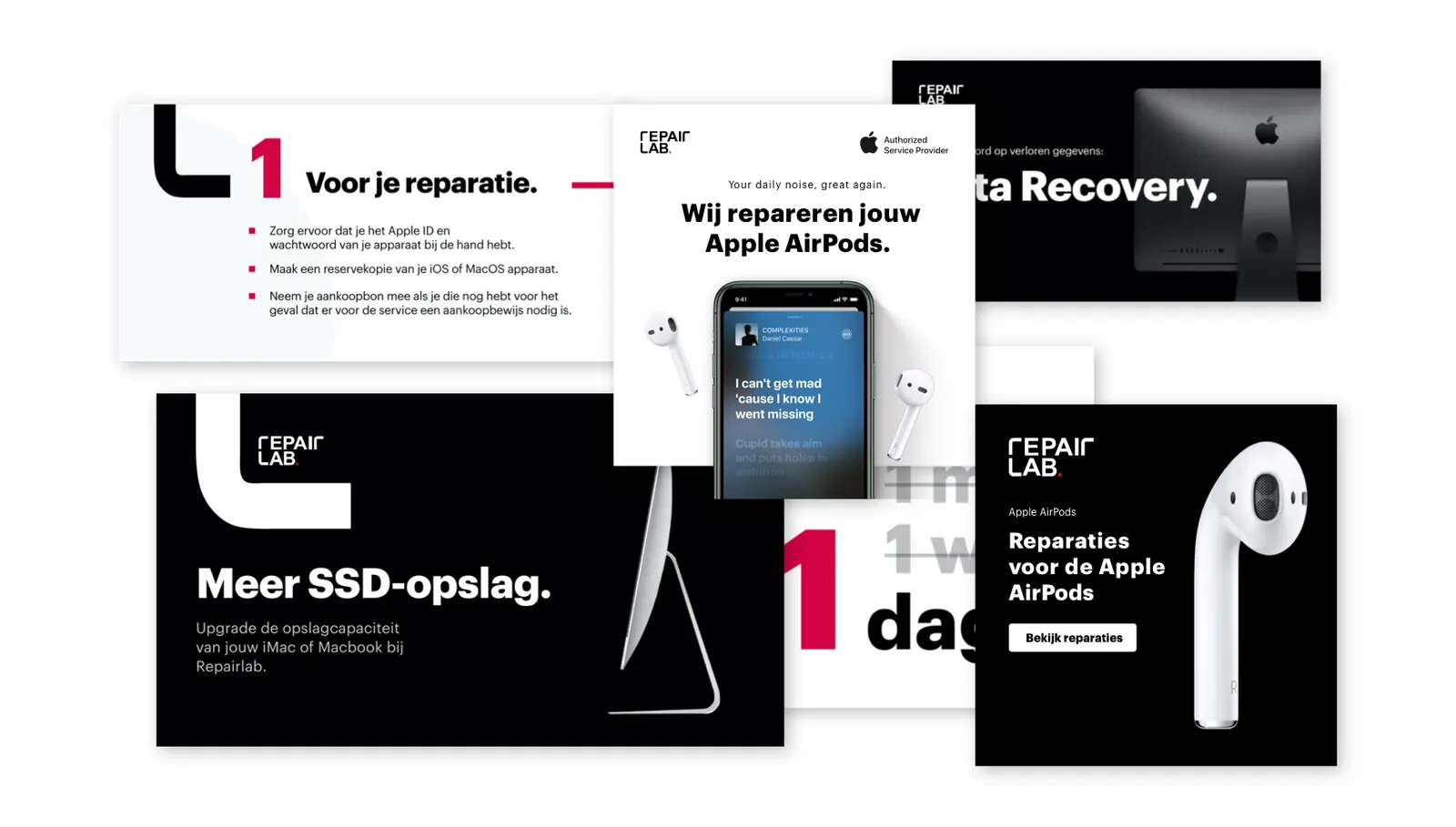
How do you guide customers on your website to the right repair?
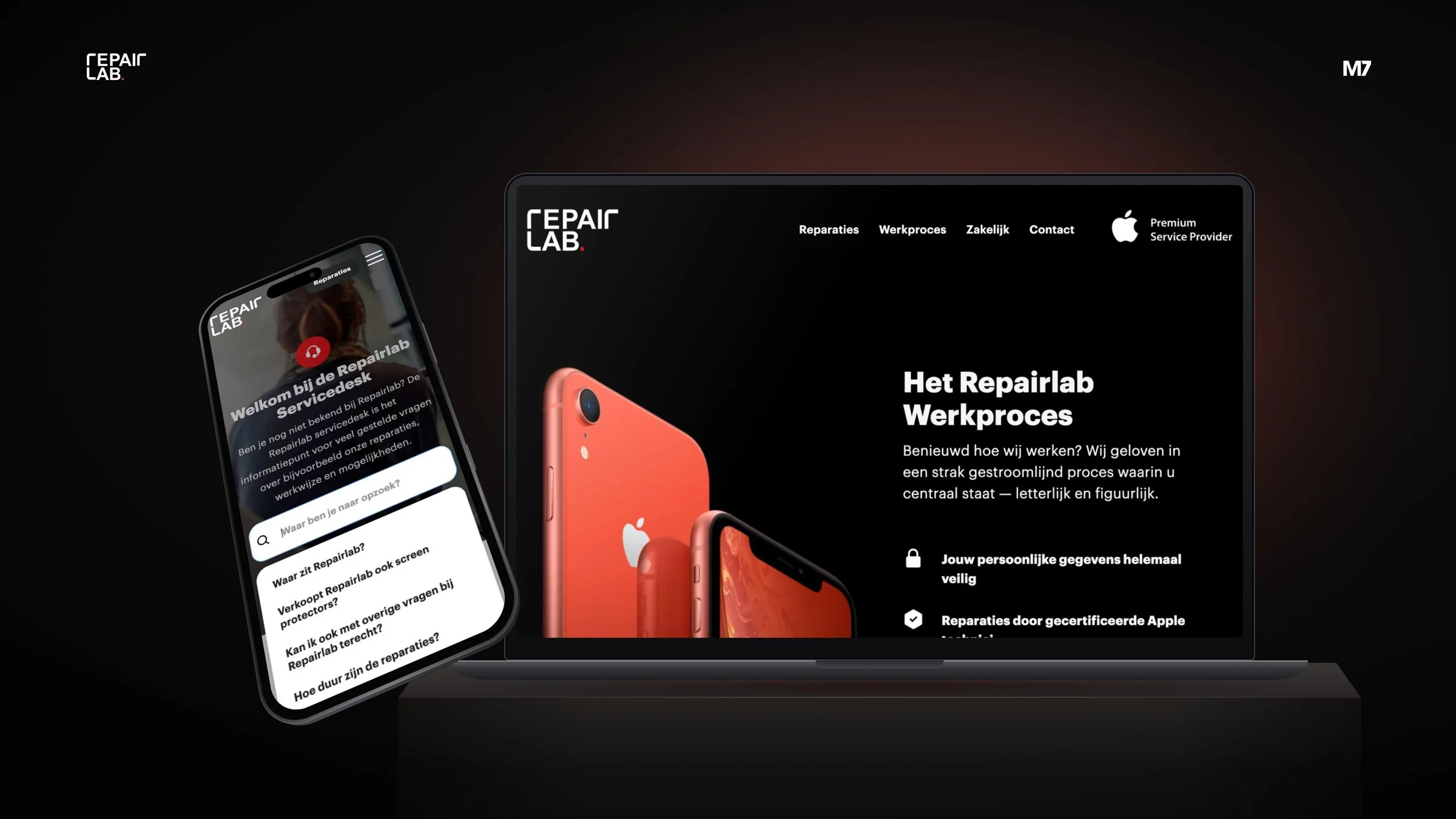
Let them choose rather than search. First the brand, then the model, then the problem, and straight after that the price and a time slot. For Repairlab we built a device finder per brand and model with a clear booking flow, so customers reach a repair appointment in a few clicks. A booking flow that connects to your schedule saves calls asking 'what does a new screen cost?' and gives you all the info you need in advance.
How do you make every branch of a chain carry the same brand?
With clear agreements and good templates. A practical brand book sets out how logo, colours, photos and tone work, with examples of what does and does not work. Ready-made templates for posters, social posts and price tags help too, so a store manager can create something that is right. That way the brand stays recognisable, even when each branch runs its own local promotions.
Does a shop need a loyalty programme?
Not always, but it can deliver a lot if you have regulars who come back often. The biggest benefit is often not the discount, but knowing who your customers are and being able to invite them personally. A loyalty programme linked to your till and web shop works the same online and in store. Start simple, with a few perks customers really value, and expand when it catches on.
How do you draw more people into your store with online campaigns?
By advertising locally with a reason to come: a new collection, a workshop, an event or a product you only have in store. With Meta Ads you reach people within a radius of your shop, and with Google Ads people who are already searching for what you sell. Combine that with a good Google Business Profile with directions and opening hours, so the step to your door is small.
For web shops, online retailers, D2C brands, online food stores and made-to-measure suppliers, from new web shop to established e-commerce player, and the marketers and e-commerce managers behind them. Everything for web shops & e-commerce
How do you increase the conversion rate of a web shop?
By looking at where visitors drop off and starting there, rather than tinkering with everything at once. Often it is the basics: slow product pages, unclear shipping costs, too few product images or a checkout with too many steps. Trust matters too: reviews, clear return policies and payment methods people recognise. With conversion optimisation we test improvements one at a time and measure what they deliver. That way you get more out of the visitors you already have.
How do you get more out of Google Shopping?
It starts with your product feed, not your bids. Google needs to understand exactly what you sell, so titles with brand, type, size and colour, good images, correct categories and complete attributes. A messy feed costs you impressions and money. Then we set up the campaigns around margin, not just revenue, so you advertise the products that actually make you money. With Google Ads and solid conversion tracking you steer on profit instead of clicks.
How do you show a price that depends on dozens of options?
With pricing rules you manage yourself. A base price per square metre or per piece, surcharges per option, volume discounts and a minimum price. The customer sees the price update live with every choice, so there are no surprises at the end. For MisterGlass we built a web shop with a price calculator per product. With a price calculator and an admin panel you adjust prices when your purchasing costs change, without needing a developer.
Which email flows should every web shop have?
A handful of flows do most of the work. A welcome series for new subscribers, a reminder for an abandoned cart, a thank-you email with tips after purchase, a review request once the product has been in use for a while, and an email for customers who have not bought anything in some time. We set those up in a tool like Klaviyo, connected to your web shop. After that, your email marketing largely runs by itself, and you only send campaigns when you have something to say.
Shopify or WooCommerce: which suits my web shop?
Both are fine platforms, with a different character. Shopify is clear, stable and quick to launch, with fixed monthly costs and apps for extra features. WooCommerce runs on WordPress and gives more freedom in custom work and content, but needs more maintenance. We look at your range, your integrations and who manages the web shop day to day, and advise what fits best. No preference out of habit, just an honest choice.
How do you migrate a web shop without losing your Google rankings?
By treating it like a house move with an inventory list. First we map all existing URLs, products, categories and reviews. During the migration every old page gets a redirect to the right new one, and we carry over titles, copy and structured data. After launch we use technical SEO checks to see whether Google picks everything up properly. A small dip in the first weeks is normal; good preparation limits the risk of a big drop.
How does a D2C brand build a brand that does not compete on price alone?
By giving a reason to choose you that has nothing to do with discounts. A clear story about where your product comes from, who it is for and what you do differently, translated into a brand strategy you see everywhere. The unboxing is your first physical contact with the customer: well-considered packaging design makes that moment worth sharing. People who recognise your brand are less quick to compare on price.
Who we work for
From independents to market leaders
- Food producers
- Food startups
- Regional food producers
- Coffee roasters
- Breweries and distilleries
- Food wholesalers
- Bakeries
- Butcher shops
- Delicatessens
- Cheese shops
- Supermarkets
- Food trucks
- Caterers
- Corporate caterers
- Meal services
- Retail chains
- Franchise formats
- Concept stores
- Gift and lifestyle shops
- Repair shops
- Web shops
- D2C brands
- Online food stores
- Made-to-measure suppliers
Today may be the day to meet your strategic partner.




 Martijn, Noud and the rest of the team are ready for you.