







From solar parks and battery storage to installers, energy advisors and cooperatives: we make sustainable technology understandable, findable and appealing.






















Cleanenergydeservesastorypeopleactuallyget.
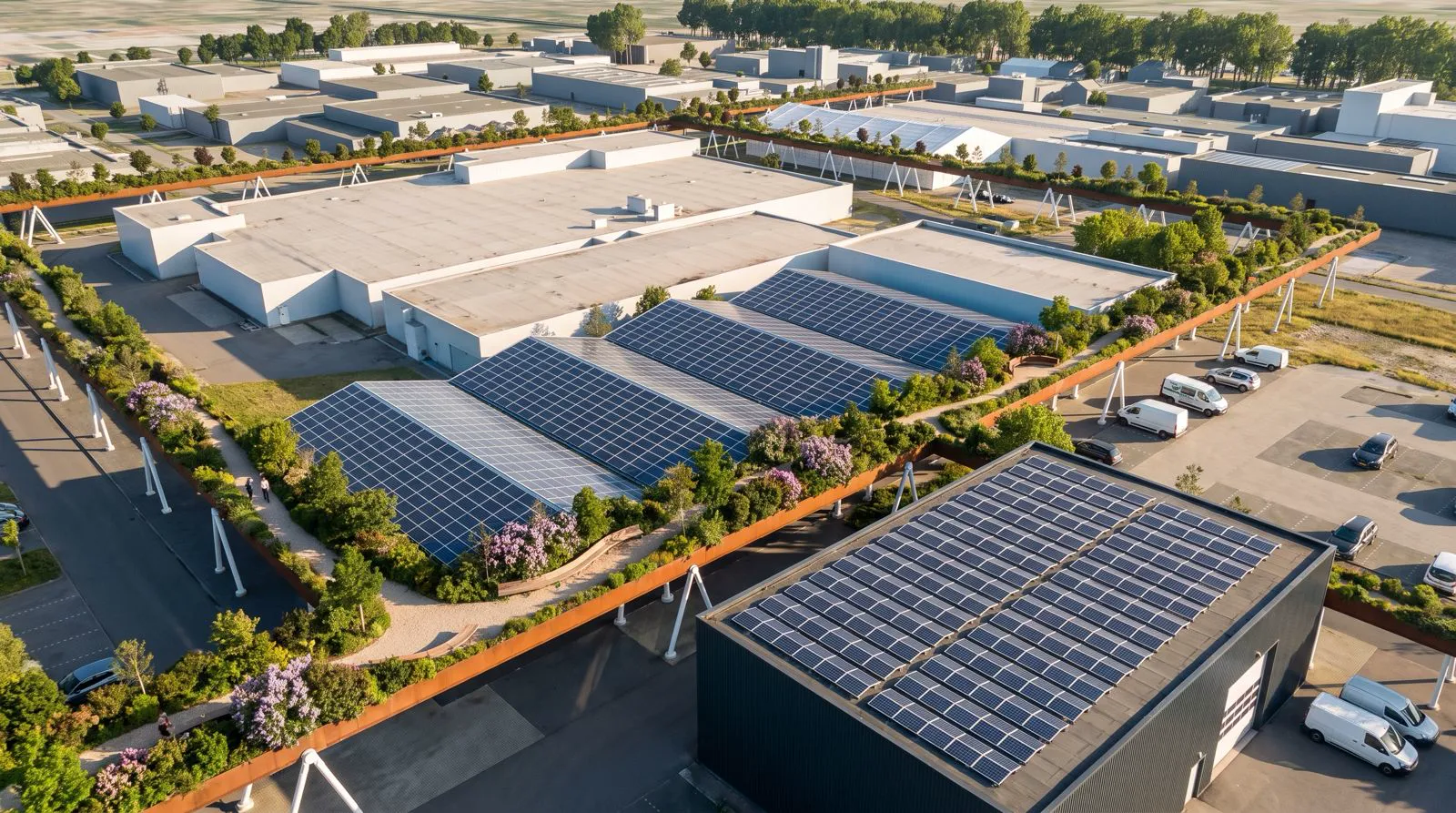
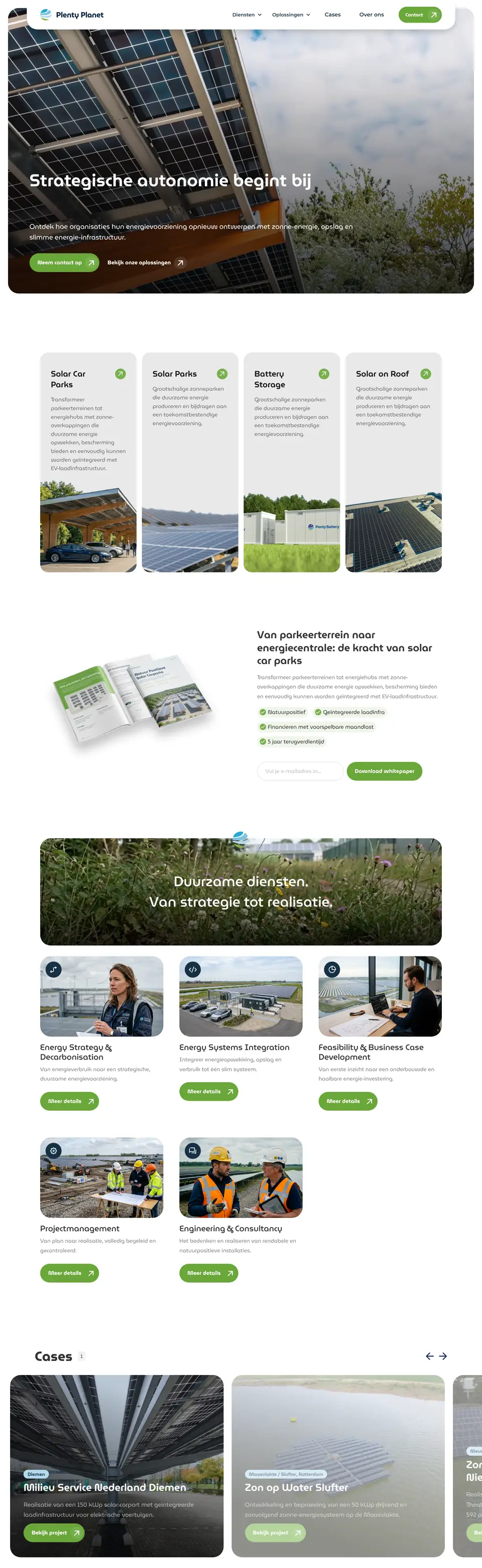
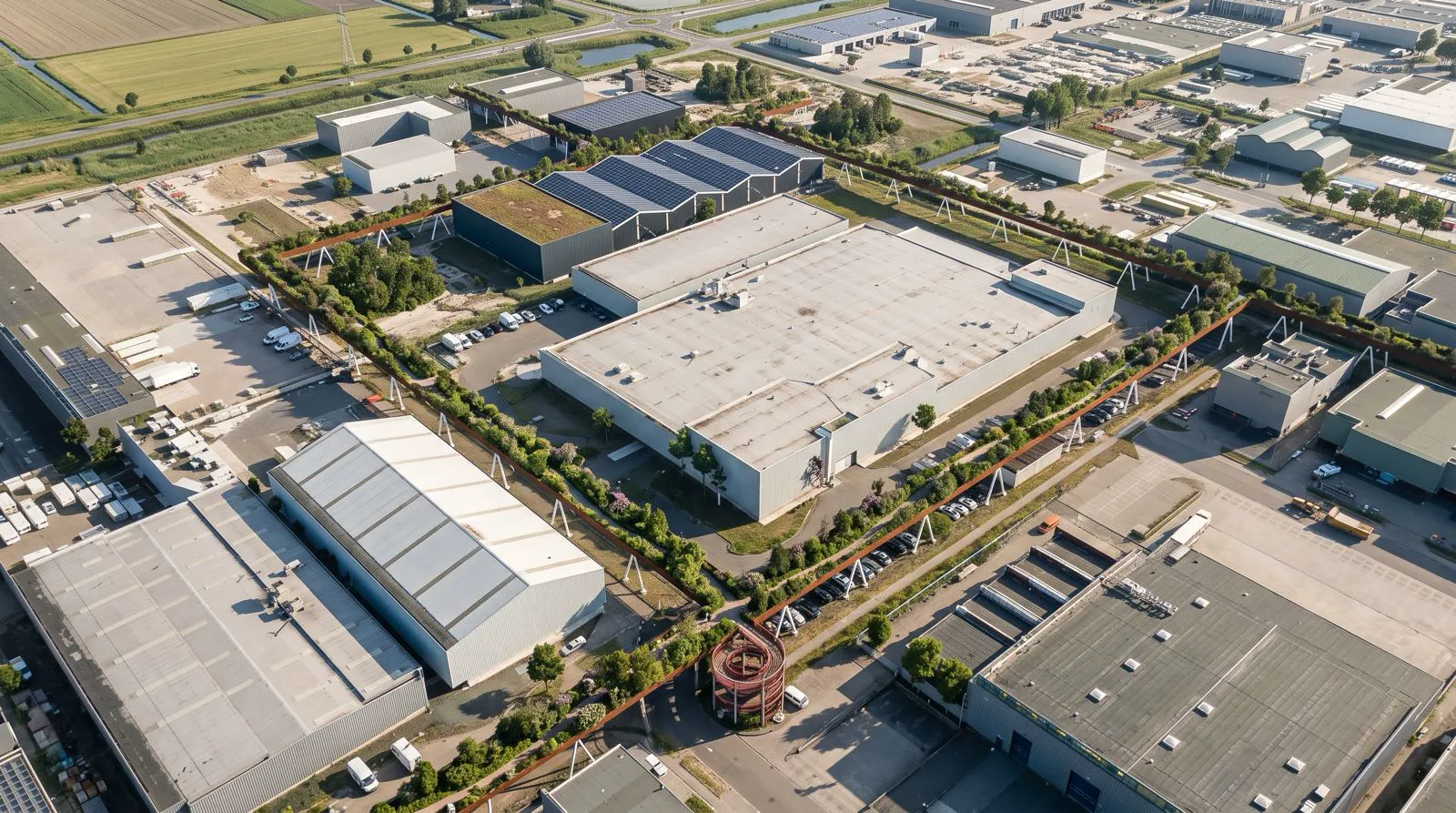
You cannot see sustainable energy, but you do have to explain it. A customer wants to know what it delivers, what it costs and whether their roof, building or car park is suitable. Meanwhile the rules keep changing, such as the end of net metering in the Netherlands, and the power grid is full in many places. M7 helps energy companies, installers and advisors tell that story clearly. For Plenty Planet we built the website about solar car parks, solar parks and battery storage, and created a 3D visual of the Green Eco Corridor.
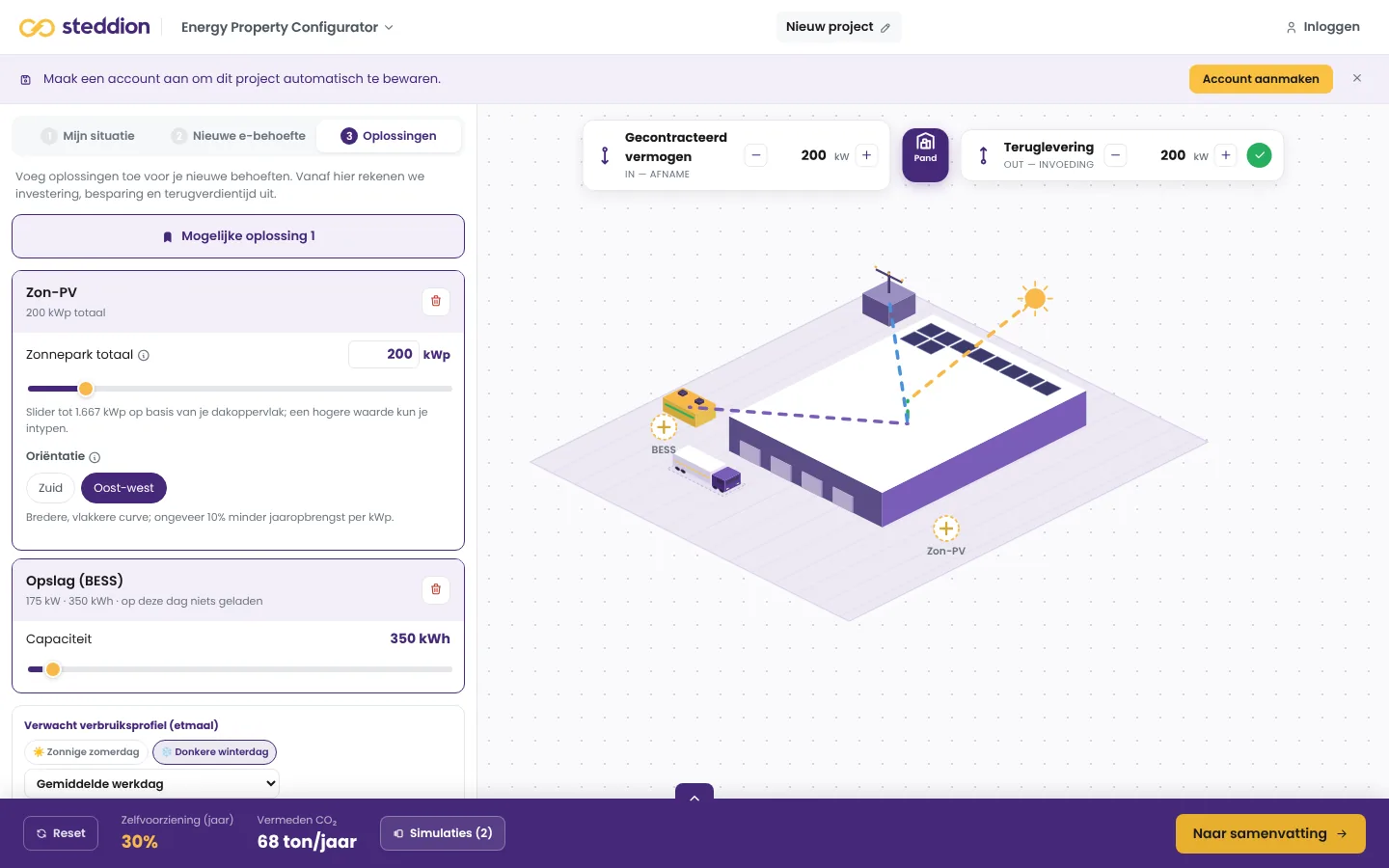
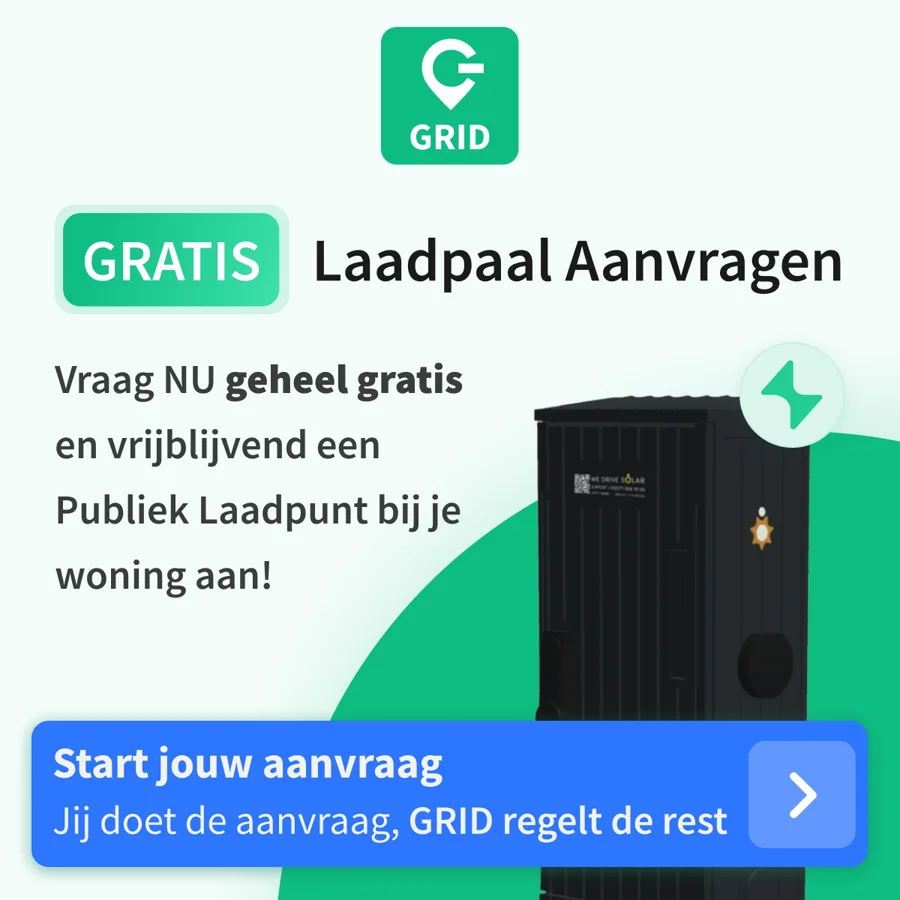
We also build tools that take over the maths. In Steddion's Energy Property Configurator, a property owner enters a building's consumption and charging needs and sees a possible solution with solar panels and battery storage. For GRID we created social ads that let residents request a free public charging point near their home. With local SEO, a quote calculator and targeted campaigns we make sure installers get enquiries that are complete, instead of an inbox full of 'roughly how much would that cost?'.
Challenges in this sector
What we often see.
Technology that is hard to explain
kWp, BESS, feed-in charges: you get it, your customer often does not. With clear pages, an animation or a product finder you turn technology into a decision someone dares to make.
Quotes that take a lot of time
Every enquiry starts with five questions back. A quote calculator or quick scan asks about the roof, consumption and wishes up front, so you receive enquiries you can work with straight away.
Standing out in a crowded market
There are a lot of installers and most websites look alike. A distinct brand, real project photos and local SEO make the difference between a price comparison and a customer who chooses you.
Showing projects before they exist
A solar park or battery system starts out on paper only. With 3D visuals and drone footage you show municipalities, investors and local residents what is coming and how it fits into its surroundings.
Projects
Work we're proud of
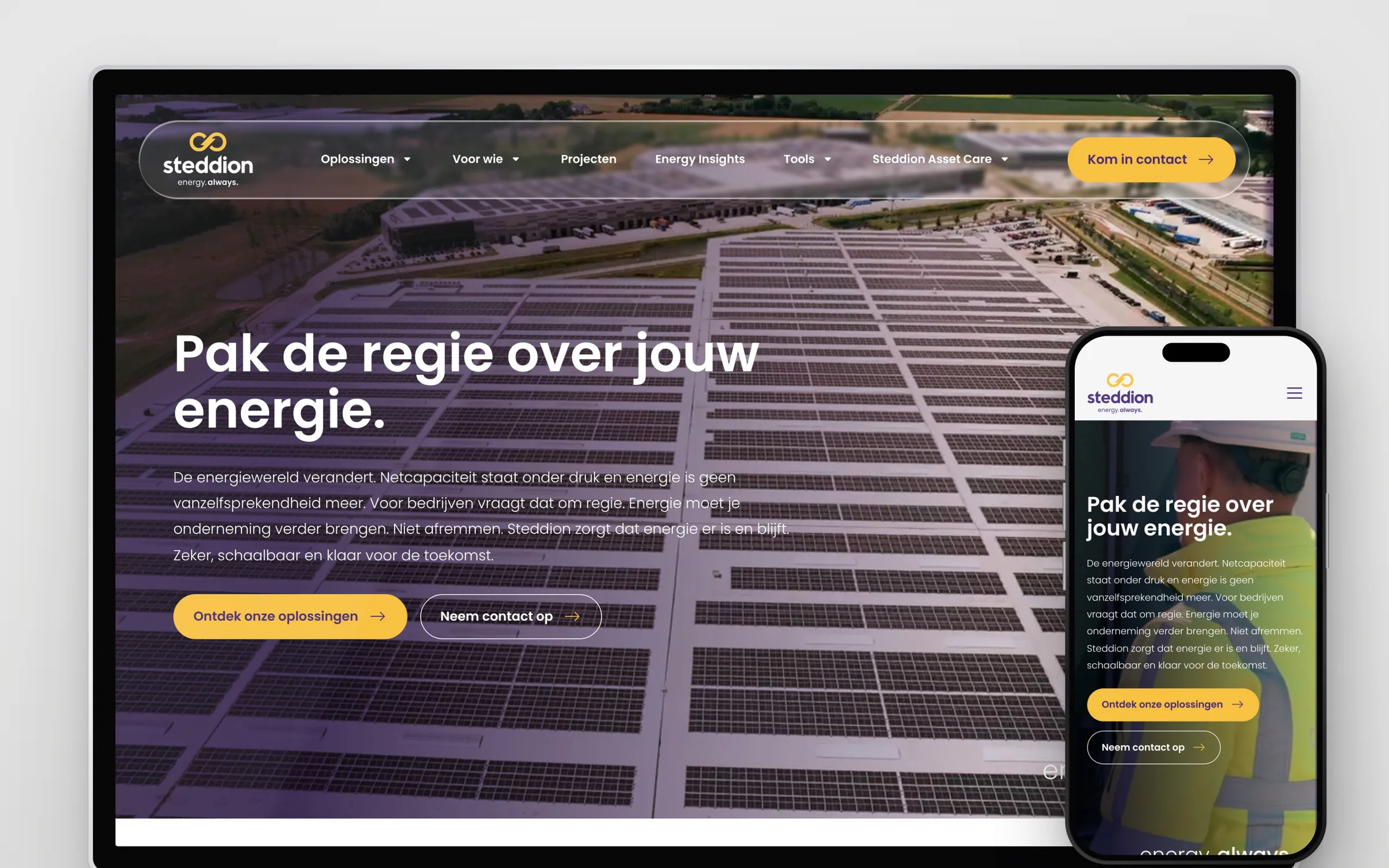 Steddion: energy security, clearly explained
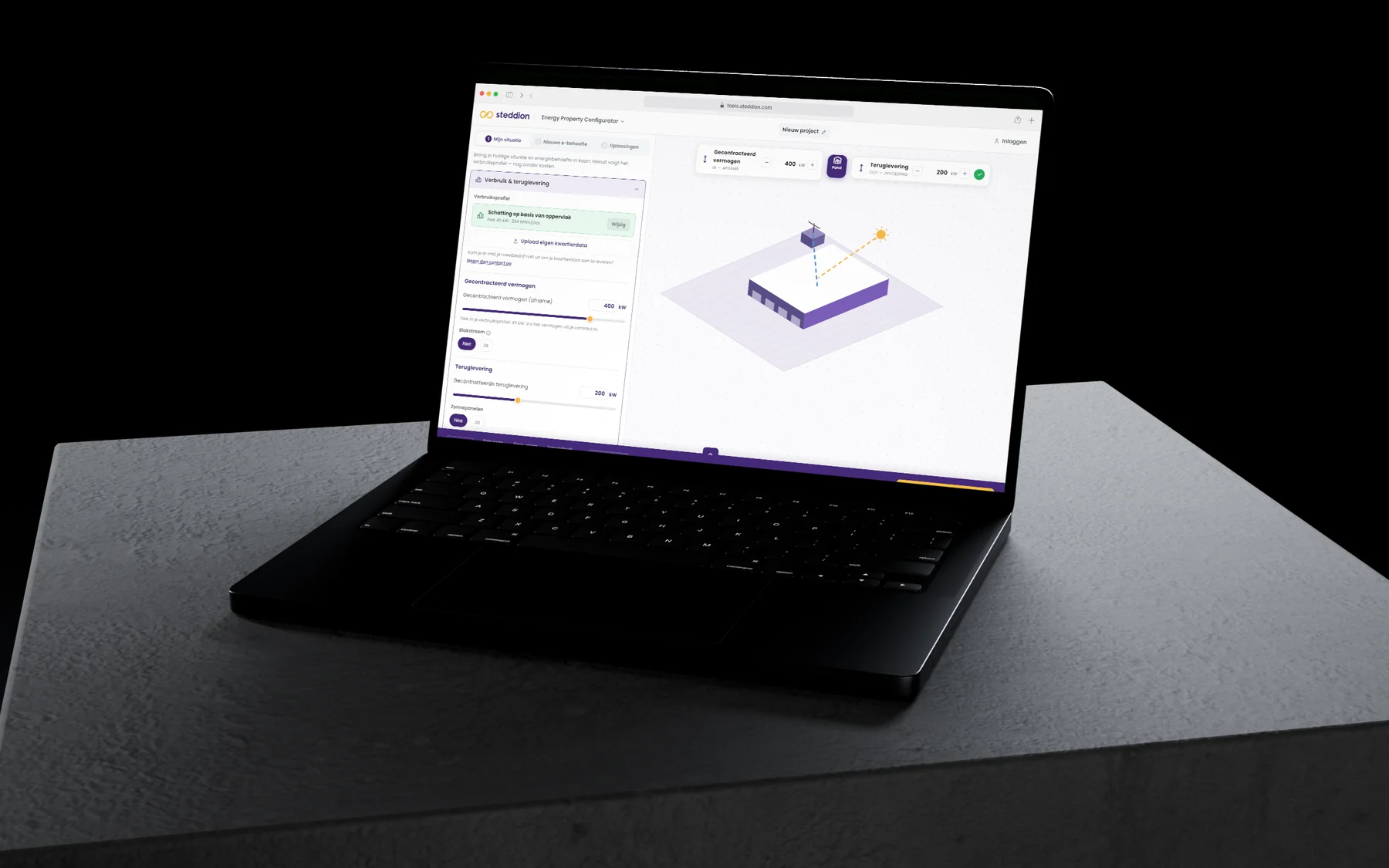 Steddion's EMS comparison tool and Energy Property Configurator
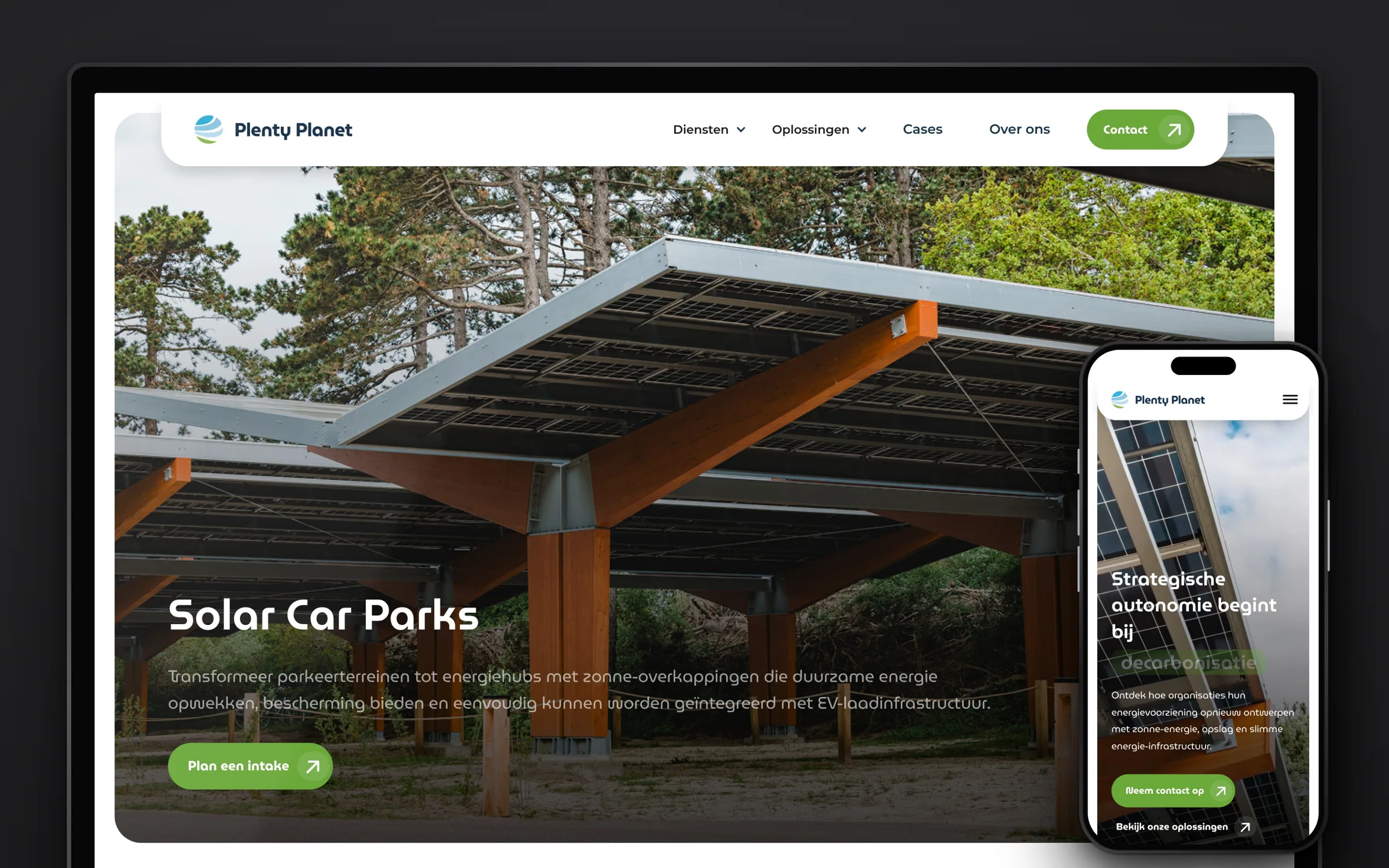 Plenty Planet: brand, website and configurator for local energy
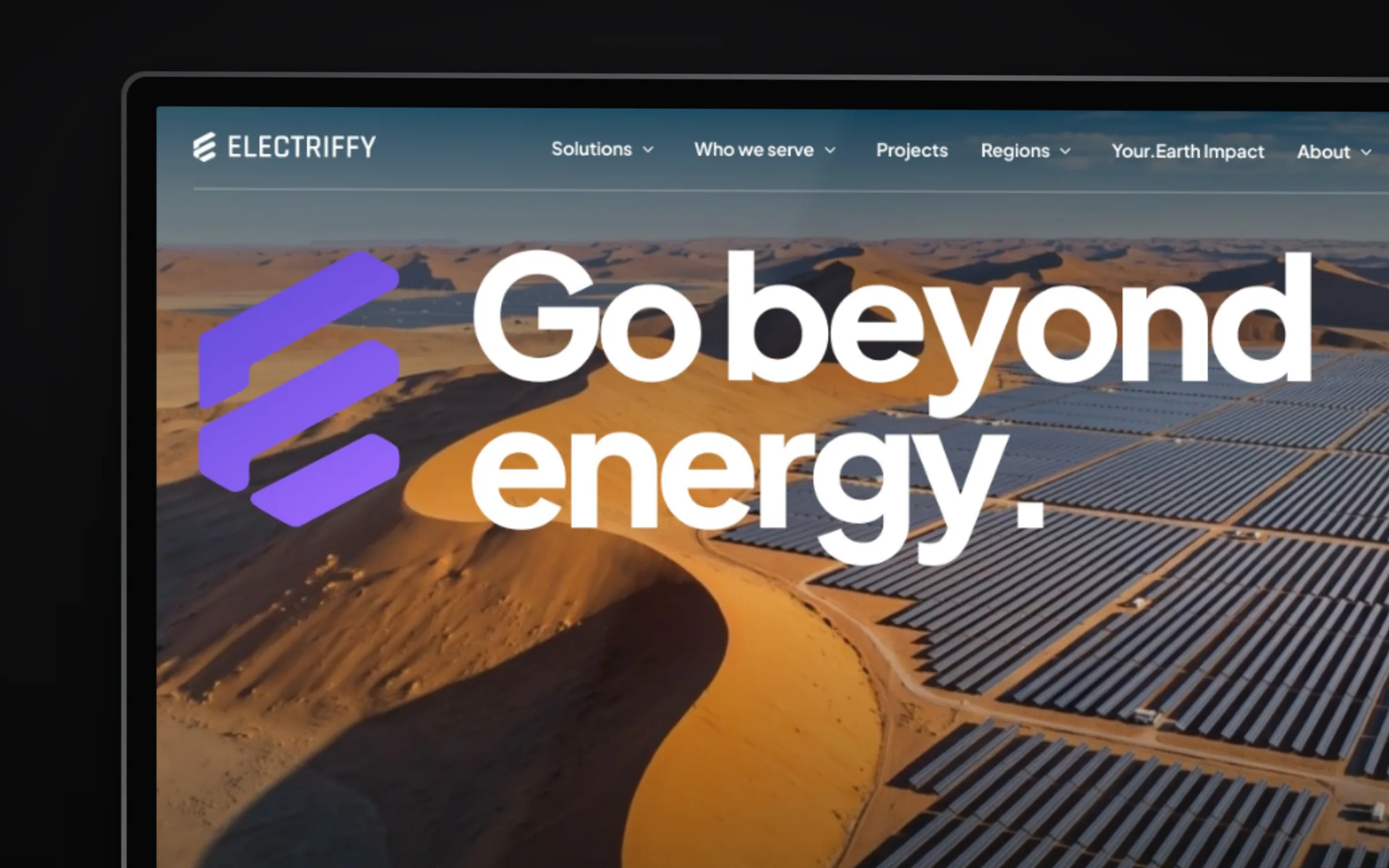 Electriffy: going beyond energy
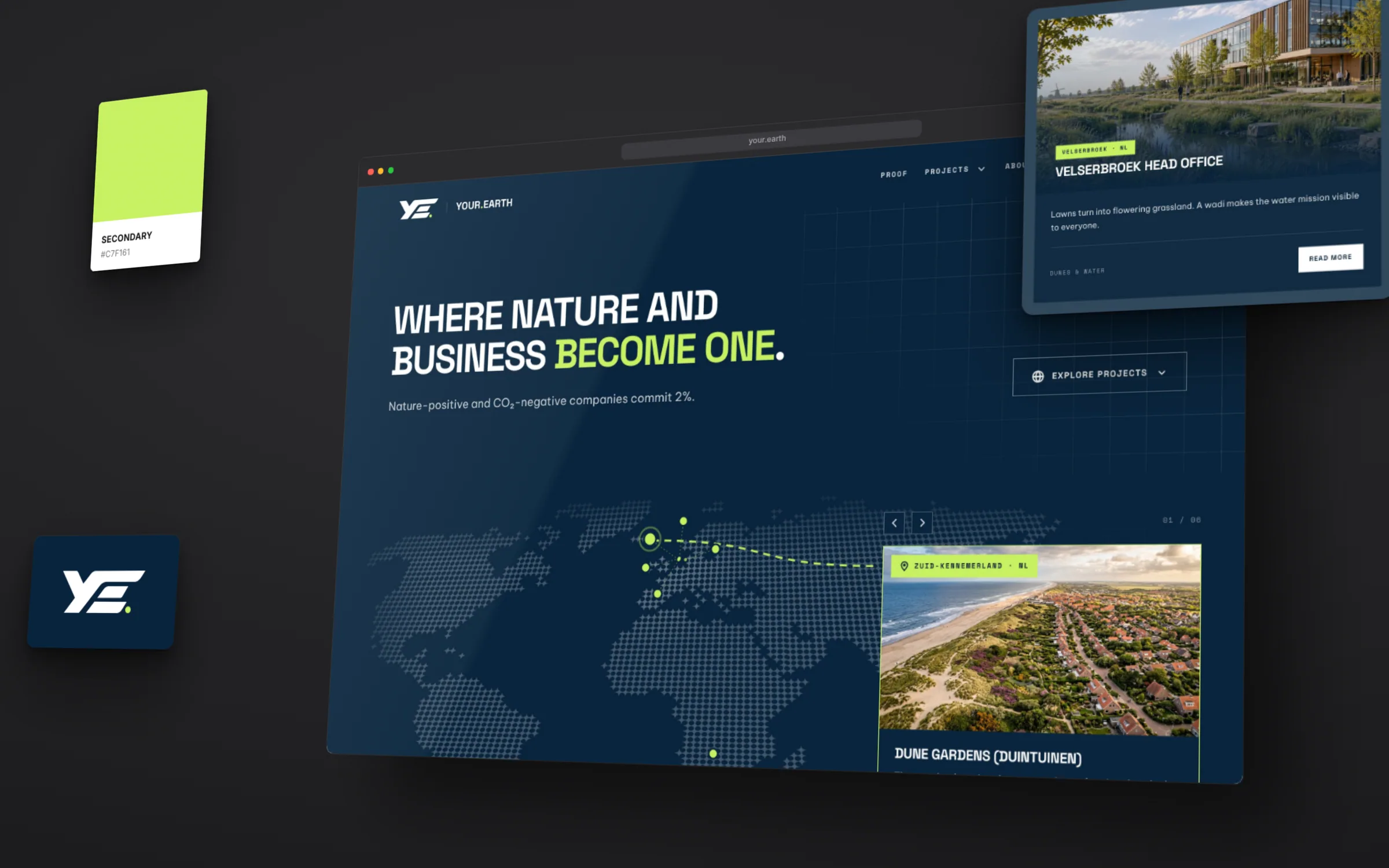 YOUR.earth: where nature and business become one
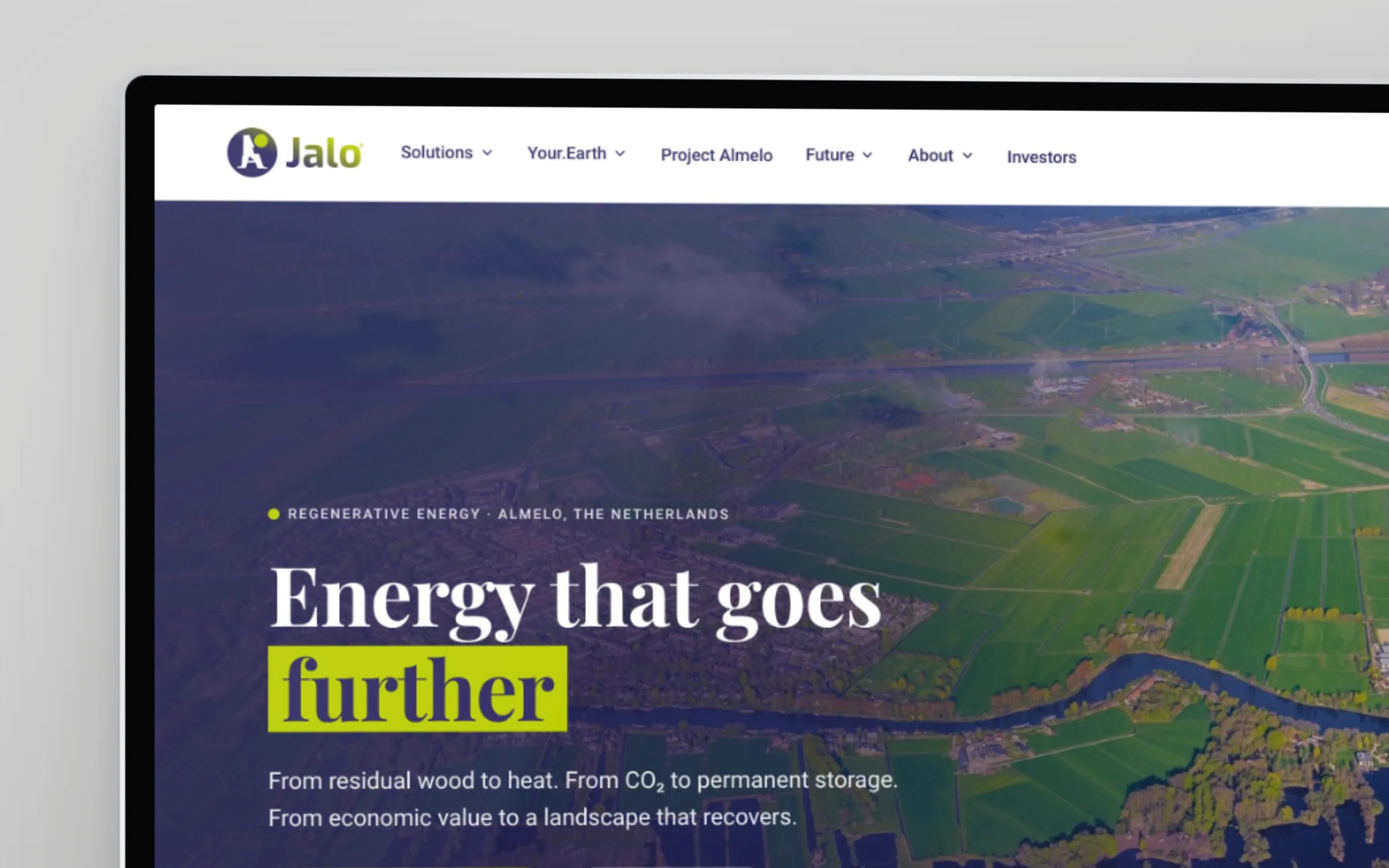 JALO Energy: energy that goes further
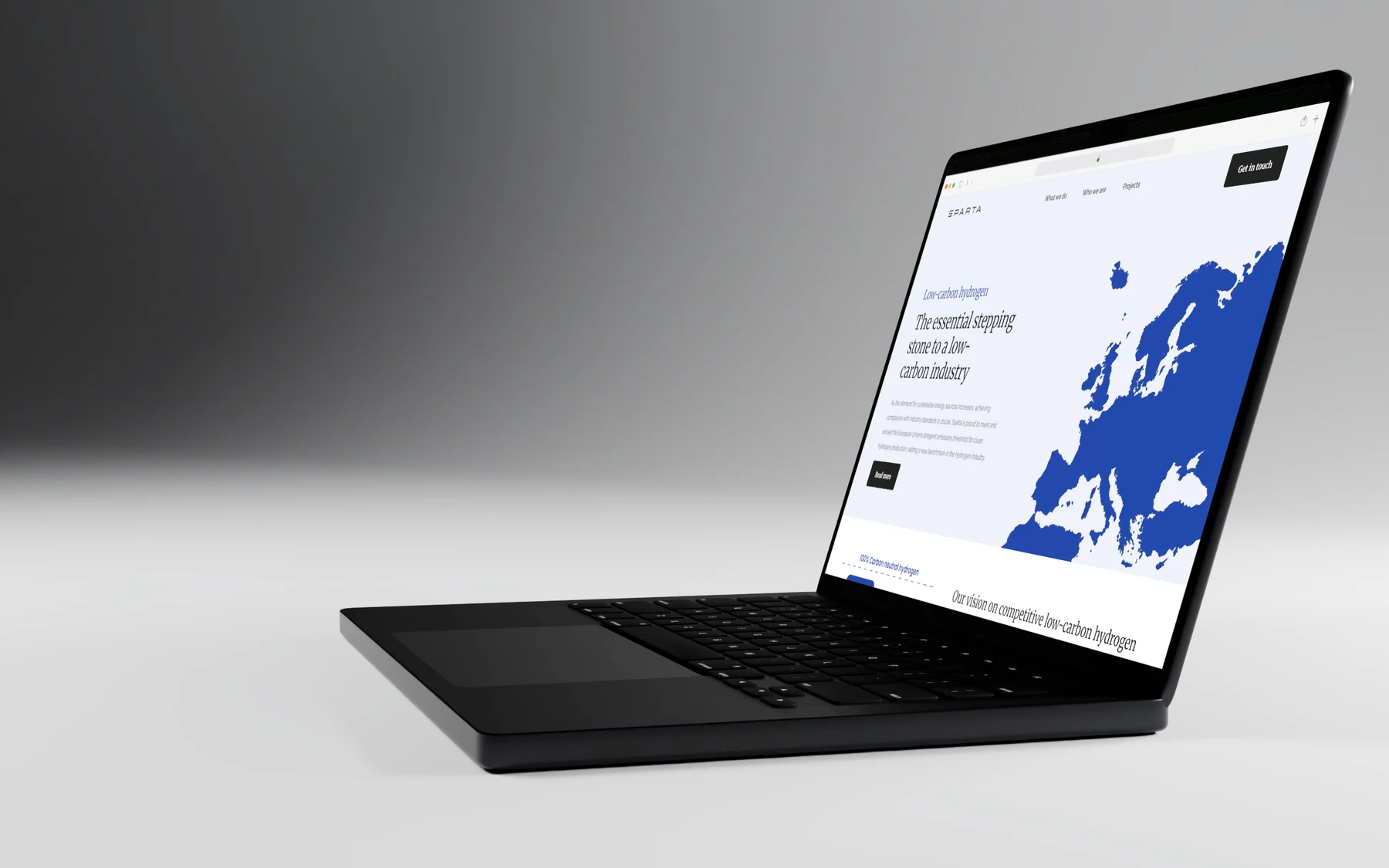 Sparta Blue Hydrogen: brand and website
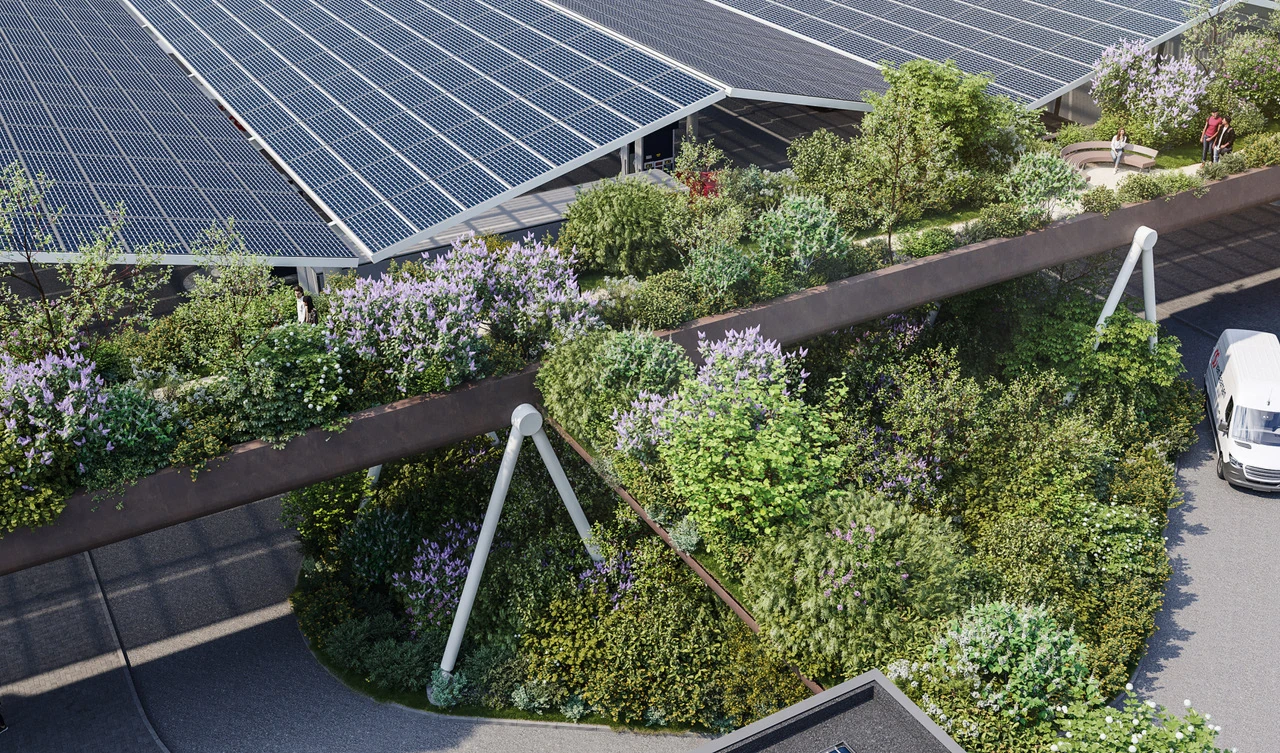 Van Baarsen eco corridor: green above the business site
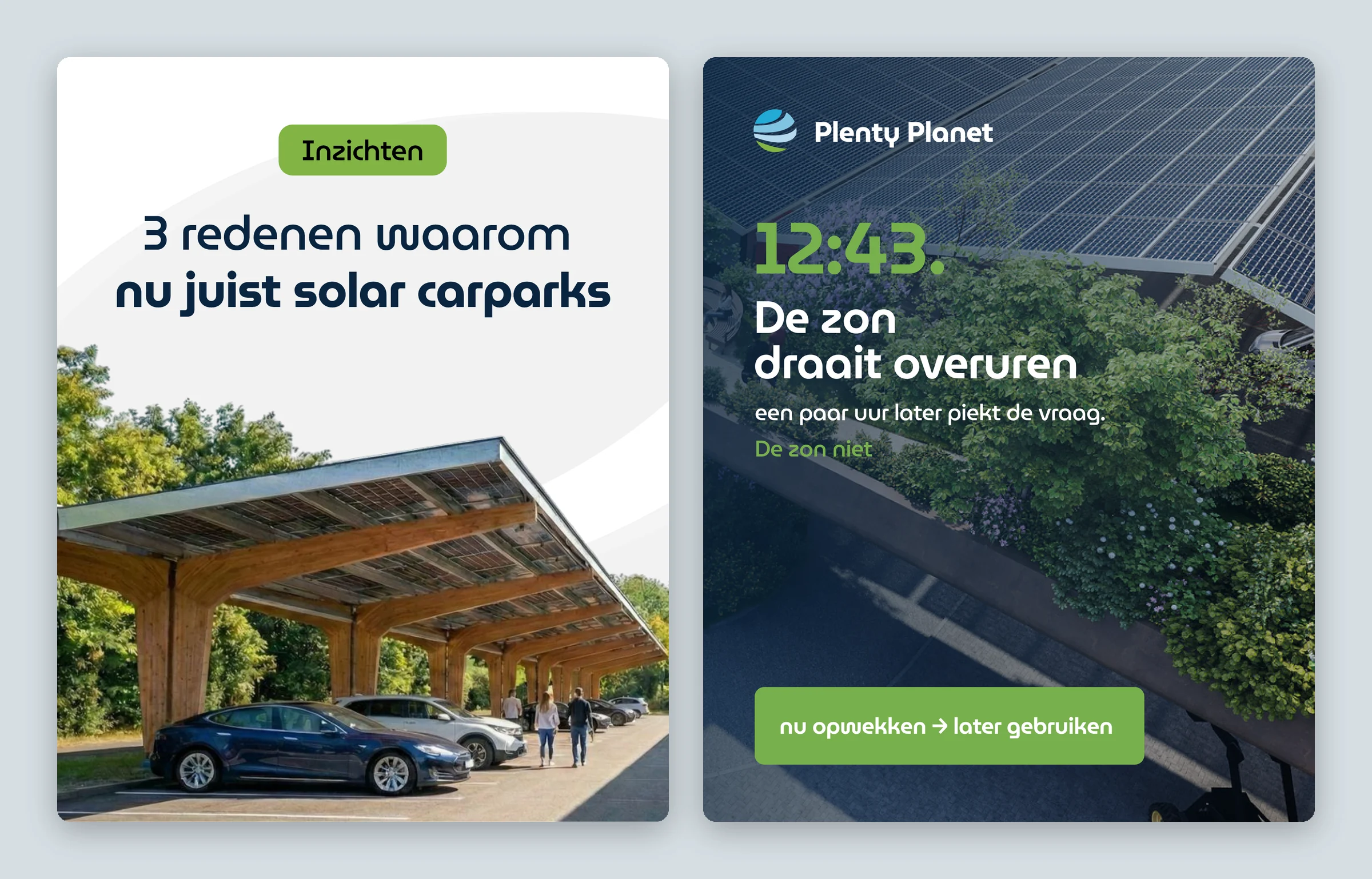 Plenty Planet: energy stories for LinkedIn
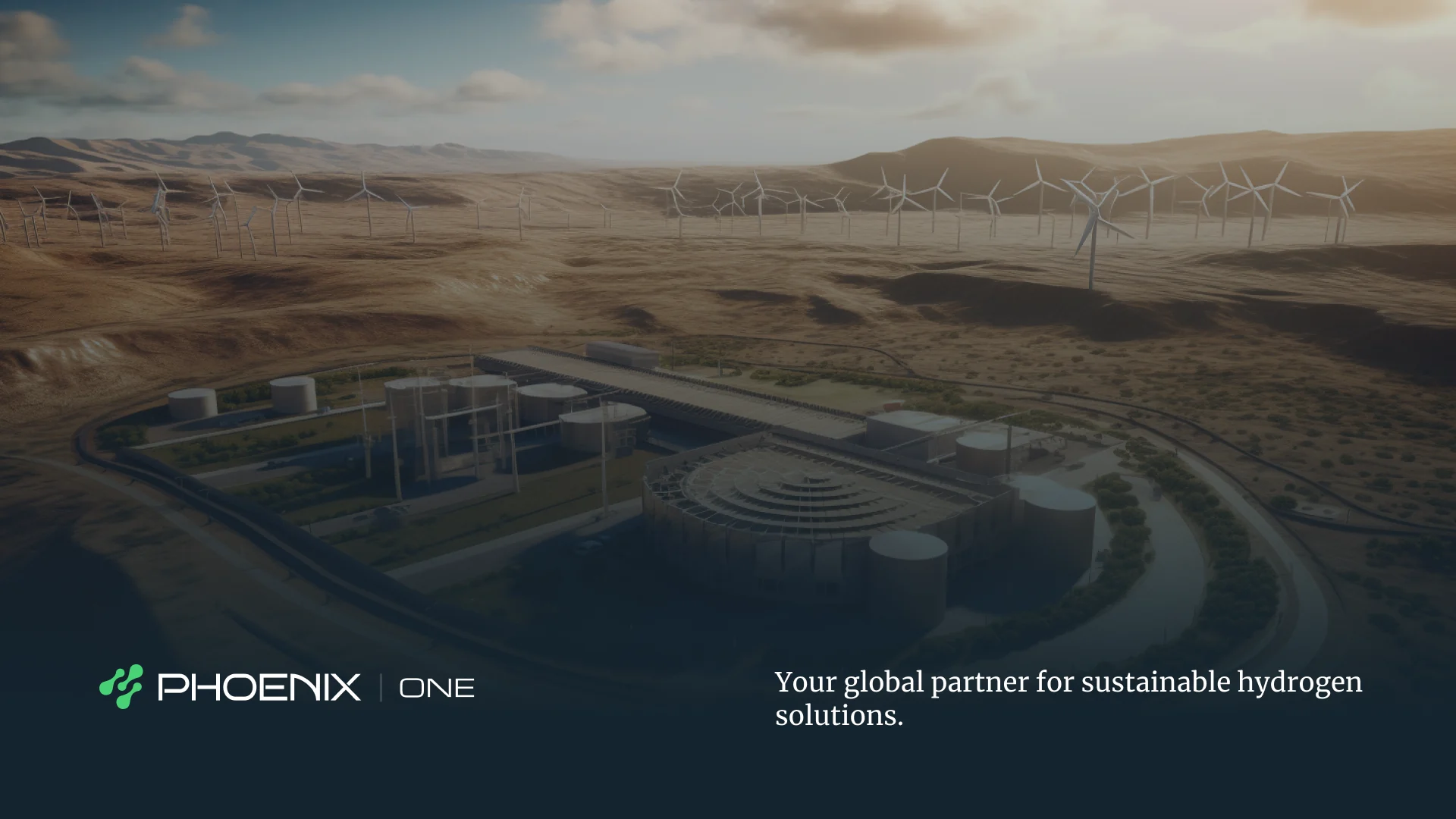 Phoenix: green hydrogen, from Texas to Europe
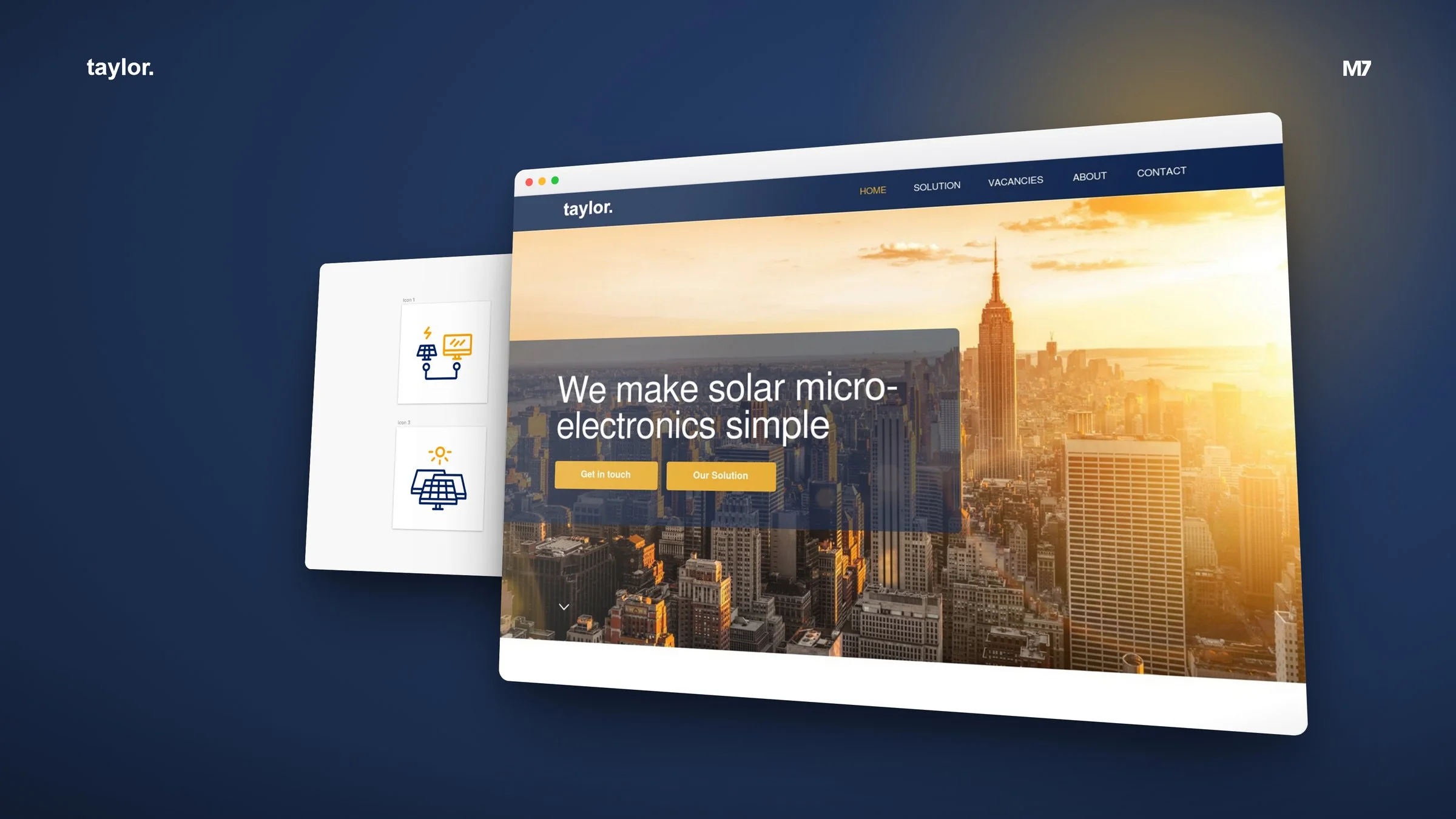 Solar micro-electronics made simple
Relevant services
How we help
Popular applications
Frequently asked questions
Frequently asked
Do you build websites for solar panel and heat pump installers?
Yes. We build websites that show what you do, which region you work in and what customers can expect, with real project photos and reviews. A quote calculator or quick scan makes sure enquiries come in complete.
Can you build a configurator for energy solutions?
Yes. For Steddion we built the Energy Property Configurator, where property owners enter a building's consumption and charging needs and see a possible solution with solar PV and battery storage. We tailor a tool like that to your products and calculation rules.
Do you create 3D visuals of solar parks and energy projects?
Yes. For Plenty Planet we created a 3D visual of the Green Eco Corridor. Based on drawings or models we create renders and animations for permit procedures, investors and information evenings.
Do you also work for energy cooperatives and local initiatives?
Definitely. We help cooperatives with a clear website, member recruitment and project communication, with an approach and budget that suit an organisation that often runs on volunteers.
How do you avoid greenwashing in your communication?
By staying concrete. We do not write vague claims like 'climate neutral' without evidence, but show what you actually do, with facts you can back up. That is more honest, and it is more convincing too.
For developers of solar parks and solar carports, battery storage providers and companies that make large roofs, car parks and business parks more sustainable. Everything for solar & storage
How do you explain battery storage to a business customer?
Start with their problem, not the battery. One company wants to expand but cannot get a bigger grid connection because of congestion. Another pays a lot for peaks in its consumption. Explain how storage solves that, with a simple animation of power being stored during the day and used later. A quick scan based on consumption and connection then makes it concrete. That way you talk about the customer's situation first, and about kilowatt-hours later.
What should be on a solar park developer's website?
Mainly answers for three groups: landowners, municipalities and investors. Landowners want to know what it pays and how long a contract runs. Municipalities and local residents want to know how you treat the surroundings. Investors look for experience and current projects. Give each group its own route, with project pages, a map and a fixed contact person. For Plenty Planet we built a website about solar car parks, solar parks and battery storage.
Does a 3D visual help with permits and public support?
Often, yes. Residents react to what they imagine, and that is usually worse than reality. A realistic 3D visual from the road, the cycle path or a back garden shows how a park or carport really sits in the landscape, including greenery and screening. That makes an information evening a lot calmer. For Plenty Planet, for example, we created a 3D visual of the Green Eco Corridor. It will not get you the permit by itself, but it does make the conversation more honest.
How do companies with a large roof or car park find us?
Through the search terms they use themselves, such as 'solar panels on car park', 'solar carport company' or 'battery for grid congestion'. Write a page per application that really answers the question, with examples and an honest explanation of the approach. Decision-makers increasingly ask ChatGPT or Perplexity the same thing. With SEO and GEO we make sure you show up in Google and in AI answers. LinkedIn also works well to reach facility managers and property owners directly.
How do you find landowners for a solar park or battery project?
By answering their questions before your competitors do. A farmer or company with spare land wants to know roughly what it pays, how long a contract runs and what happens to the land afterwards. Put that honestly on a dedicated landing page, with a simple form to register a plot. With targeted Meta Ads and LinkedIn Ads in your search areas you reach owners before someone else calls them.
What belongs in a pitch deck for an energy project?
The story in the order an investor thinks: the location, the status of grid connection and permit, the technology, the planning, the team and the business case, with the risks honestly included. Show rather than tell as much as possible, with a map, a render and a few clear charts. A good pitch deck also works when you are not in the room, because it gets forwarded after the meeting. We design it so you can quickly adapt it per project.
How do you keep local residents informed during construction?
With one fixed place where everything is correct. A project page with the planning, this week's works, expected disruption and a point of contact prevents a lot of irritation. Send interested people a short email update when something changes. Drone footage of the progress shows the work is moving and how the park will sit in the landscape. That keeps the conversation with the neighbours calm, even when something does not go to plan.
For installers of solar panels, heat pumps, home batteries and EV chargers, installation companies and insulation specialists who want more and better enquiries from their own region. Everything for installers
What makes a good website for a solar panel installer?
Trust and speed. Visitors want to see that you really exist: photos of your own installations, your team, your service area and reviews. Then they want to know quickly what it roughly costs, so a quote calculator with an estimate works better than just 'get in touch'. Also explain what happens after the enquiry: site survey, quote, installation and registration. People who know what is coming are less likely to drop out. And make sure everything works smoothly on a phone.
How do I get more heat pump enquiries as an installer?
First take away the doubts. Is my house suitable? Hybrid or fully electric? Am I eligible for the Dutch ISDE subsidy? A product finder with a few questions about construction year, insulation and heating gives honest advice and produces an enquiry with the right details. Also write pages that answer those questions, so people find you while they are still exploring. Ads in autumn, when everyone is thinking about heating costs, do the rest.
How should I handle the end of net metering in my communication?
Honestly and without panic. Customers read headlines like 'solar panels no longer worth it' and start to doubt. Calmly explain what is changing, what it means for someone getting panels now, and where a home battery or smart usage does and does not help. A worked example says more than a slogan. We write that content so it also gets found for the questions people are typing into Google and ChatGPT right now. That makes you the installer who explains rather than sells.
Is advertising worthwhile for EV chargers and home batteries?
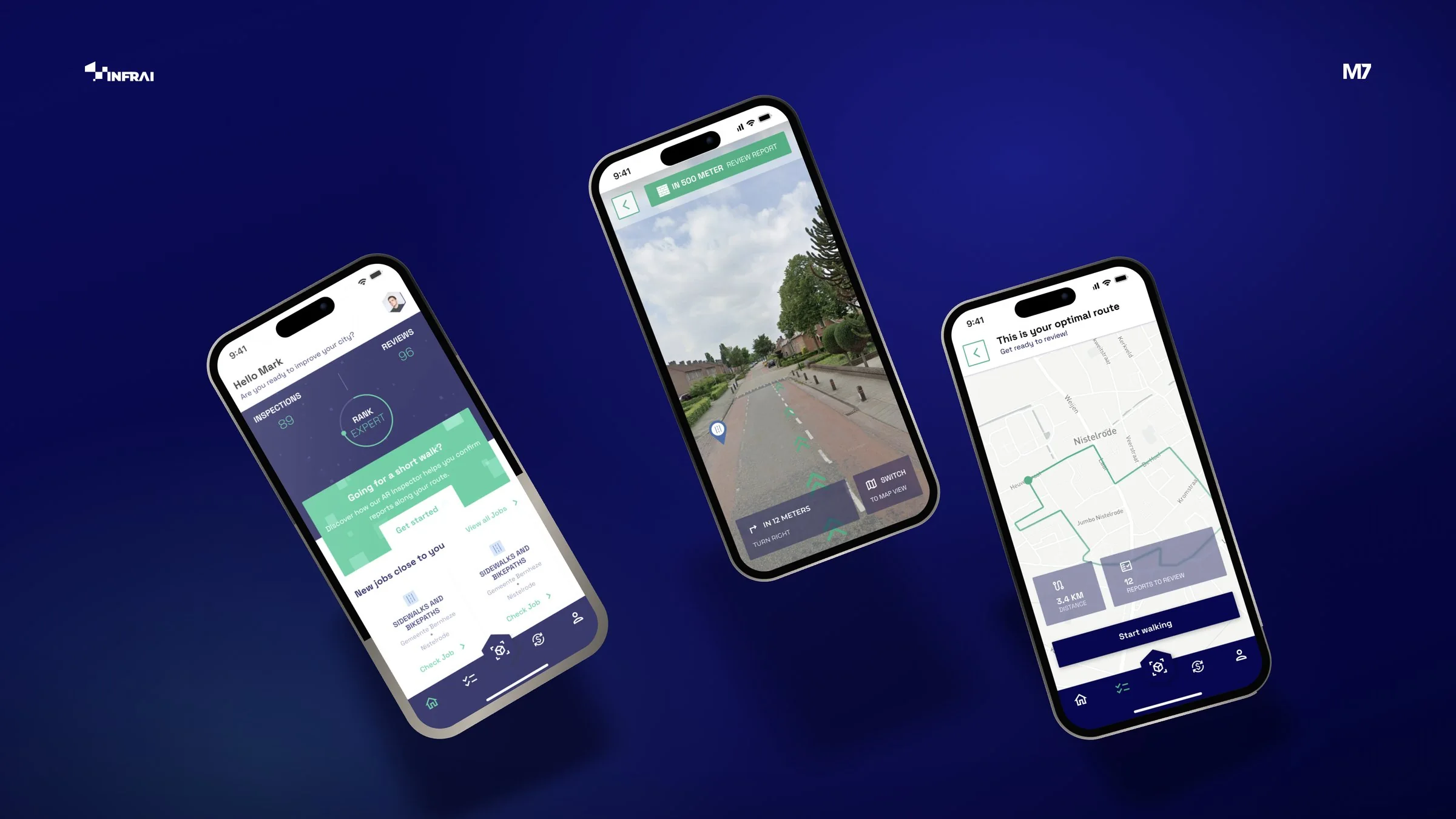
Yes, if you link the product to a moment. Someone who has just ordered an electric car is looking for a charger. Someone shocked by their feed-in charges is looking at a battery. With Google Ads you catch those searches, with Meta Ads you reach people in your area who are not actively searching yet. For GRID we created social ads that let residents request a free public charging point near their home. One clear action in the ad does most of the work.
How do I find good technicians as an installation company?
By showing what the work with you is really like, because skilled people choose an employer, not a job ad. Let colleagues talk about their jobs, the van, the training and the team spirit. Keep applying short, without a mandatory CV, and respond quickly. With employer branding, a few short videos and targeted Meta Ads in your region you also reach technicians who are not actively looking but are open to something new.
How important are Google reviews for an installer?
Very important. When investing in solar panels or a heat pump, nearly everyone first looks at other people's experiences, and reviews count towards your visibility in Google Maps. Ask for them when the customer is happy, for example a few days after completion, with a direct link. With an automated flow that happens on every job without anyone having to remember. Reply to every review, including the critical ones, calmly and concretely.
Can a chatbot answer questions about subsidies and payback time?
Yes, if you scope it well. An AI chatbot that only answers from your own pages and up-to-date subsidy information helps visitors outside office hours too. Do not let it make firm promises about yield or payback time; have it refer to your calculator or an advisor instead. Subsidy rules change regularly, so keep the source up to date. That way the bot handles the standard questions and your advisor has time for the real conversations.
For energy advisors, energy label assessors, sustainability advisors and companies that help make homes, commercial buildings and property portfolios more sustainable. Everything for energy advice & property
How does an energy configurator for property work?
The owner enters the details of their building step by step, such as the consumption profile, the charging needs for cars and their wishes. The configurator uses that to calculate a possible solution, for example with solar panels and battery storage, and shows what it does to grid consumption and feed-in. For Steddion we built a configurator like that: the Energy Property Configurator. The owner gets a first picture, the advisor an enquiry with the right details. That is a better start than an empty contact form.
How do I get found as an energy advisor for 'request an energy label'?
With a page per service and per region, because people search locally and specifically: 'energy label Eindhoven' or 'tailored home energy advice'. Put on those pages how the price is set, how soon you can come and what the customer needs to prepare. A complete Google Business Profile with reviews helps a lot. With local SEO we build that up step by step. And with an appointment widget the assessment lands straight in your calendar.
Can our clients find their advice and reports online?
Yes. In a client portal the energy label, the advice report and the proposed measures are kept together per building. For property owners with several buildings that is extra handy: one overview with the status per building. Clients can also ask questions there or request a follow-up job. That saves you searching and emails saying 'could you send that report again?'. Where possible we connect the portal to the software you already use.
How do you make an advice report clients actually read?
Put the most important part first: a one-page summary with the current situation, the three measures with the biggest gains and a logical order. Then the reasoning follows for those who want to read on. With Infographics & data visualisation and a fixed template, the client sees at a glance where they stand. Put the report in a client portal too, so an owner with several buildings finds everything in one place.
Can AI help with writing energy advice reports?
Yes, as preparation. AI can turn assessment data and notes into a first draft, or summarise a technical report in plain language for the client. The calculations stay in the certified software you already use, and the advisor always checks and signs off personally. Start with one type of report and measure how much time it saves. With AI integrations and a clear AI strategy it fits into your existing way of working.
How do you reach property owners and owners' associations with sustainability questions?
By responding to what is currently on their desk, such as the energy label requirement for offices, a long-term maintenance plan or a bank asking about the energy label. Write practical articles and checklists about that, so they find you as soon as they start searching. Professional owners and managers are easy to reach through LinkedIn, owners' association boards more often through Google. With SEO content and LinkedIn Ads you become the advisor they call when things get concrete.
For energy cooperatives, local energy initiatives, charge point operators, district heating networks and others that bring energy closer to residents and businesses. Everything for cooperatives & infrastructure
How do you recruit members or participants for an energy cooperative?
By making it local and concrete. People join 'the solar roof on the sports hall' or 'the wind turbine by the village', not 'the energy transition'. Give each project its own landing page with visuals, plain-language explanation and a simple way to sign up. Tell people who is behind it, because trust in your neighbours works better than any slogan. With local social campaigns and a newsletter you keep interested people engaged until registration opens.
How do you get residents to request a charging point?
Make the step as small as possible. One clear message, one button and a form that takes a minute to fill in. For GRID we created social ads with exactly that approach: request a public charging point near your home, completely free and without obligation. Aim the campaign at the streets and neighbourhoods where you want to install, and show what a charging point looks like. With Meta Ads you can target a campaign precisely at an area.
How do you communicate about grid congestion without scaring people off?
By explaining what it is and what people can do about it themselves. Grid congestion sounds like a problem you cannot change. But smart charging, storage and cooperation on a business park do help. A short animation of a full grid on a busy day makes it clear in half a minute. Then follow up with a page of concrete options per situation. That way it does not feel like bad news, but like a challenge you tackle together.
How do you organise a good information evening about an energy project?
Invite widely and make it concrete. Use a leaflet through the door, local social posts and a sign-up page, so you know how many people are coming. On the evening, show what is really coming, for example with a 3D visual from a familiar spot in the village, and explain what happens with questions and concerns. Put the presentation and the answers online afterwards, for those who could not make it.
How do you communicate about a heat network without residents dropping out?
By answering the questions residents actually have: what will it cost me, what will I notice at home, how long will installation take and what if I do not take part? Be honest about what has not been decided yet. A short animation explains how a heat network works, an address check shows what it means for your street. A fixed questions-and-answers page that you update after every meeting keeps rumours from taking over the story.
Can a cooperative run by volunteers keep the website up to date itself?
Yes, if you keep it simple. We build a website with a clear back end, where volunteers post news, projects and calendar items without technical knowledge. With fixed templates every page looks good, whoever makes it. We explain it in a short session. Hosting, updates and security are covered with hosting and maintenance, so nobody on the board has to lose sleep over it.
For sustainability consultancies, CSRD and ESG advisors, circular businesses, recyclers and refurbishers who want to show what they really do, without green waffle. Everything for circular & sustainable business
How do you communicate sustainability without greenwashing?
Be concrete and stick to what you can prove. Claims like 'climate neutral' or 'green' without evidence can get you into trouble: the rules on sustainability claims have become stricter and regulators are watching. Instead, say exactly what you do, for example which material you reuse and how you check it. Also show where you are not there yet. That is more honest and more convincing. We help you with a brand strategy and tone of voice built on that.
How does a sustainability advisor find clients with questions about CSRD and carbon?
By answering the questions companies have right now. Many business owners get questions about their carbon emissions from large customers or the bank, or are unsure whether reporting requirements such as the CSRD apply to them. Write clear articles and guides about that and make sure they are found in Google and AI search. With SEO content and LinkedIn Ads you reach the finance director or sustainability manager looking for someone to keep track of it all. Sharing knowledge simply brings in clients here.
How do you sell refurbished or circular products online?
By removing doubt. A buyer of refurbished goods wants to know what condition the product is in, what has been replaced and how long the warranty runs. Work with clear quality grades, real photos of the product and an honest explanation of the process. For product-as-a-service or a take-back scheme, a short step-by-step explanation helps. We build a web shop that makes all of that clear, with the links to your stock and logistics that you need.
How do you make an impact or sustainability report people read?
Start with the core on one or two pages: what you did, what it delivered and where you are not there yet. Visualise the key figures with Infographics & data visualisation and keep the full tables for the appendix. Make a web version too, so you can share parts of it on LinkedIn and in proposals. A well-designed report shows you take it seriously, without making it look better than it is.
How do you convince business buyers that refurbished is reliable?
By showing the process and making the agreements clear. A buyer wants to know how you test, which parts you replace, what warranty you give and how delivery and service work. Set that out on a clear page, with quality grades and a short film from your workshop. For regular customers, a dedicated ordering environment with their own prices works well. That way refurbished is not a gamble, but a conscious choice.
Can customers view their own impact or carbon savings online?
Yes. In a dashboard or client area a customer sees per period what was collected, reused or saved, with the related certificates or proof of processing. The data comes from your own systems through API integrations, so you do not keep anything twice. Customers often use those figures in their own sustainability reporting, which makes you a partner instead of a supplier. Do make sure the calculation method is correct and explainable.
Who we work for
From independents to market leaders
- Solar park developers
- Solar carport specialists
- Battery storage companies
- Commercial solar companies
- Energy hub developers
- Solar panel installers
- Heat pump installers
- EV charger installers
- Home battery specialists
- Installation companies
- Insulation companies
- Energy advisors
- Energy label assessors
- Building sustainability consultancies
- Energy management companies
- Energy cooperatives
- Local energy initiatives
- Charge point operators
- District heating companies
- Green energy suppliers
- Sustainability consultancies
- CSRD and ESG advisors
- Circular businesses
- Recycling and refurbishment companies
Today may be the day to meet your strategic partner.




 Martijn, Noud and the rest of the team are ready for you.