







Care providers, practices and wellbeing organisations: we build accessible websites, apps and brands that inspire trust and help people on their way.























Carestartswithclarity.
In healthcare and wellbeing, communication is about trust, clarity and accessibility. Clients and patients want to find what they need quickly, book an appointment easily and feel heard. At the same time care organisations are looking for ways to attract staff and reduce the administrative burden. M7 helps practices, clinics and wellbeing organisations with a warm, professional presence and websites that work for everyone.
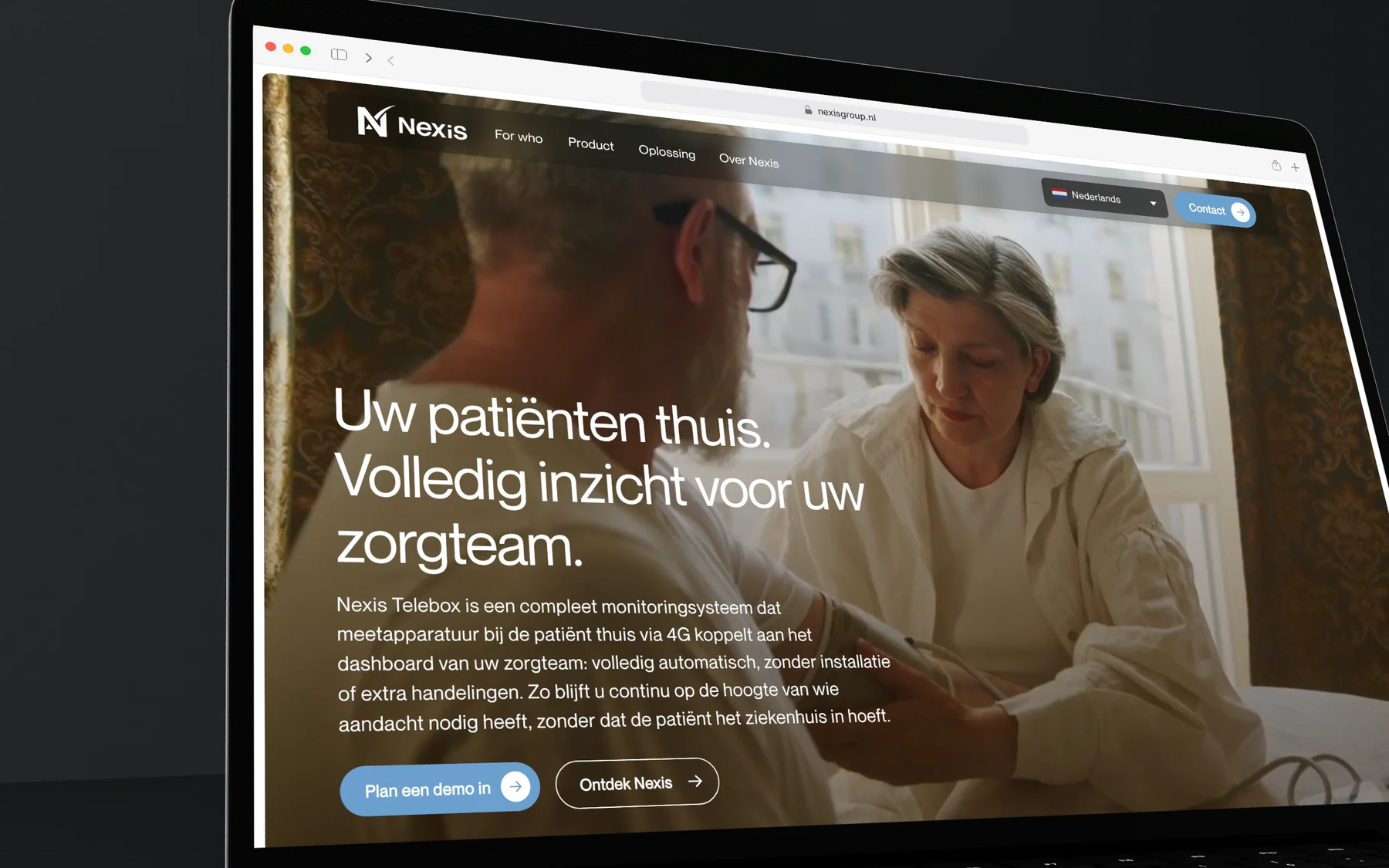
We design with accessibility as a starting point, build portals and apps for clients and care professionals and integrate booking tools and decision aids that point people in the right direction. With employer branding we help you recruit care professionals, and with an AI assistant you answer practical questions carefully, at any time of day.
Challenges in this sector
What we often see.
Accessible for everyone
Your audience is diverse, from young to old and with different impairments. We design to WCAG guidelines, with plain language, good contrast and simple navigation.
Appointments and intake
Scheduling by phone takes a lot of time. With online booking, digital intake forms and a decision aid you lower the threshold and relieve your front desk.
Recruiting staff
Care professionals are scarce. With employer branding, a careers website and targeted campaigns you show why your organisation is a great place to work.
Privacy and care
You work with sensitive data. We build portals and tools with attention to security, the GDPR and careful handling of personal data.
Relevant services
How we help
Frequently asked questions
Frequently asked
Do you build accessible websites for healthcare?
Yes. We design and build to WCAG guidelines, with attention to legibility, contrast, keyboard navigation and plain language, so your website works for as many people as possible.
Can clients book an appointment online?
Yes. We integrate a booking widget or connect to your existing scheduling system, including automatic confirmations and reminders.
Is an AI chatbot suitable for a care organisation?
For practical questions, certainly, such as opening hours, reimbursements, directions or how your practice works. For medical questions the assistant always refers to a care professional. We set up the chatbot carefully and GDPR-aware.
Do you help recruit care staff?
Yes. With employer branding, a careers website, video and social media campaigns we help you attract care professionals who fit your organisation.
For physiotherapists, exercise therapists, dietitians, speech therapists, podiatrists, dentists and other primary care practices, from solo practice to health centre. Everything for practices
What should be on a physiotherapy practice's website?
Mainly the answers to questions that are now asked at the desk or on the phone. Which complaints do you treat, do I need a referral, what does my insurance cover, where can I park and how soon can I come in? Patients also want to see who they will be seeing: real photos of your team, not a stock model smiling at a gym ball. A clear button to book an appointment sits on every page. The same goes for the dietitian or speech therapist.
How does my practice become easier to find in my own neighbourhood or village?
People search close to home: 'physio near me' or 'dentist Uden accepting new patients'. Start with a complete Google Business Profile, with opening hours, photos and reviews you respond to properly. Add a page per location if you have more than one, and clear information about specialisations. With local SEO we build that up carefully. And if your practice is not taking new patients, say so honestly. That saves everyone a phone call.
How do I attract patients for a new specialisation?
A new specialisation, such as pelvic floor physiotherapy, sports physiotherapy or implantology at a dental practice, deserves its own landing page. Explain in plain language who it is for, what treatment involves and how referrals work. That helps patients and referrers such as GPs. With a few good articles and perhaps a local campaign on Google or social media, you let the neighbourhood know it exists. Calm and informative, because you do not sell care with loud promotions.
Can the website work with our practice management system?
Often, yes, but it depends on the system. Many practice software packages offer their own module for online booking or registration, which we fit neatly into your website. Some have an integration or API that allows more. Medical data stays where it belongs: in your secure system, not in an ordinary website form. We check upfront what your supplier allows, so you do not promise patients things that cannot be done technically.
How should my practice handle online reviews?
Respond to every review, briefly and kindly, but never discuss the treatment itself. Patient confidentiality applies online too, so do not even confirm that someone is a patient. When there is criticism, invite the writer to contact the practice. Feel free to ask satisfied patients for a review, for example with a card or a link in a closing email, but do not reward it. A well-kept Google profile helps your local visibility, and your replies show how you treat people.
We are a health centre with several disciplines. One website or several?
Usually one, with a clear place of its own for each discipline. Patients often search first for the care they need, then discover that the dietitian or podiatrist is in the same building. One site with a shared visual identity reinforces that, and it is easier to maintain than five separate sites. Each practice keeps its own page with team, services and booking button, and where needed its own domain name pointing to that page.
What does a new practice website cost and how long does it take?
That depends on the number of locations, disciplines and integrations, such as an online booking module. A compact website is typically online in 4 to 6 weeks, provided texts and photos are ready on time. We are happy to help with that, because real photos of your team make a big difference. You can see indicative prices in our configurator at letsgo.m7branding.com, and after a short introduction you receive a tailored proposal.
For private clinics, independent treatment centres, cosmetic and aesthetic clinics, eye clinics, hair clinics and dental centres. Everything for clinics
Can my clinic advertise treatments online?
Usually yes, but with care. There are rules for healthcare advertising, and platforms such as Google and Meta have their own policies for medical and cosmetic ads. We keep the message factual: what the treatment is, who it suits and what the process involves, without promises about results. We set up campaigns on Google Ads or Meta Ads accordingly. For the legal check, consult your own advisor or professional association.
How do I build trust before someone books a consultation?
People considering a treatment often read up for weeks. Help them with honest information: how the process works, what the risks and recovery time are, and roughly what it costs. Show your practitioners with their background and registrations, and use video to introduce the clinic and team. Patient experiences work, provided they come with consent and without exaggerated claims. A calm, polished web design does the rest.
How do I make sure enquiries from the website are followed up properly?
An enquiry left for three days is often a patient heading to another clinic. With a smart intake form, a CRM and a few automated steps it goes better: the enquirer gets an instant confirmation, your team gets a task, and anyone still hesitating after a consultation gets a friendly reminder. We only ask for sensitive data when it is truly needed, and we set everything up carefully and GDPR-aware.
How should I handle before-and-after photos on my website?
Carefully. Only use photos of real patients with their explicit written consent, and agree where and for how long you show them. Show them as they are, without retouching that improves the result, and state that results vary from person to person. Some treatments have additional advertising rules, so have the legal side checked by your own advisor or professional association. We take care of a calm, respectful presentation in your web design.
How do I attract patients from a wider area or from abroad?
People who travel further for a treatment mainly want certainty: who will treat me, how does the process work and how often do I need to come back? Answer those questions per treatment, with information about travel, accommodation and remote aftercare. A multilingual website helps if you welcome patients from Belgium, Germany or further afield. With clear pages per treatment and AEO you are also found by people who put their question to an AI assistant.
How do I make my clinic stand out without shouting?
By radiating calm and expertise in everything you do. Well-considered positioning makes clear what you specialise in and for whom, so you are not competing with every clinic on price. Real photos of your practitioners and rooms, a polished website and a brochure you hand out after the consultation make that story tangible. Leave out discount campaigns and miracle promises. In healthcare, trust works better than urgency.
For psychologists, psychotherapists, mental health practices, youth care providers, relationship therapists and coaches, from independent practitioner to multidisciplinary team. Everything for mental health & coaching
How do I lower the threshold for people looking for help?
People looking for help have often hesitated for a long time. Your website should reassure them, not overwhelm them. Write in warm, everyday language, show who the practitioners are and explain step by step what happens after registering. A short decision aid can help with the question 'is this the right help for me?', without turning into a diagnosis. And offer several ways to get in touch, because not everyone dares to call straight away.
Should I put my waiting time on the website?
Yes, if you can keep it up to date. People want to know where they stand, and an honest waiting time prevents disappointment and unnecessary registrations. We build it so you can update the waiting time yourself in seconds, per type of treatment or location if needed. If the wait is long, offer an alternative right away: interim support, the GP or a crisis line. That way nobody is left empty-handed.
How do I find new clients as an independent psychologist or coach?
Mainly by being findable and recognisable in your own specialism. Write about the themes you are good at, such as burnout, anxiety or grief, and answer the questions clients ask in the first session. That content helps on Google and with AI assistants. Referrers matter just as much: make a clear page for GPs and practice nurses with your services and waiting time. For coaches, LinkedIn often works well, as long as you show who you are.
Is an online registration form secure enough?
It can be, if you set it up properly. In a first form, ask only for what you need to get in touch, and do not store sensitive information in your regular mailbox or website database. For the actual intake, preferably use the secure environment of your record or e-health system. We take care of an encrypted connection, a clear privacy statement and a form that handles personal data carefully. For the legal details, consult your own privacy advisor.
Can I use reviews or client experiences as a psychologist or coach?
Be cautious. In mental healthcare, even the fact that someone is a client is sensitive information, and your professional code may have rules about it. Only use experiences with explicit consent, preferably anonymised, and respond to online reviews without confirming anything about the treatment or the person. It often works better to show who you are and how you work, with a short video or a personal tone on your website. If in doubt, check with your professional association.
How do I present my practice without stock photos of sunsets?
With images that show where and with whom someone will be sitting. A few calm photos of your practice room, the waiting room and yourself say more than a beach at sunset. Add a visual identity that suits the way you work: warm, down-to-earth or more businesslike. We arrange a short photo shoot in your own space, without poses that do not suit you. People choose a practitioner they feel safe with, and that starts with recognition.
Does social media work for a coach or therapist?
For coaches often yes, for therapists with more care. It works when you show how you think and work, with recognisable themes in plain language, not when you post an offer every week. LinkedIn suits career and leadership coaches, Instagram suits themes such as stress or self-confidence. A fixed content strategy with a manageable rhythm stops it becoming a second job. Never respond to personal requests for help in the comments, but refer people to a secure contact channel.
For home care organisations, nursing and care homes, disability care, care farms, supported living and wellbeing foundations, from small-scale initiative to regional care group. Everything for care organisations
How do I help clients and families find their way through our care services?
Care services are often organised in complicated ways, but visitors have one simple question: what can I get here for my mother, my child or myself? If you structure the website around that question instead of your org chart, it saves a lot of searching. A decision aid of a few questions guides people to housing, home care or day activities, and plain-language explanations make it clear for everyone. Including the son-in-law sorting it out on behalf of the family.
How do I show what living at our locations is really like?
With real images of real people, with their consent of course. A calm video of a day at the location, photos of the rooms, the garden and the living room, and a resident or employee telling what it is like. That says more than any leaflet. We shoot this kind of video and photography with respect for privacy and the residents' daily rhythm. Families looking for a place get an honest picture before they even visit.
How do you approach a website for an organisation with many locations?
With a solid foundation and room for each location. Every location gets its own page with address, services, photos, contact person and current news, in a fixed layout so it stays clear. Location managers can update their own page, with permissions so nobody accidentally edits the whole site. With local SEO per branch you are also found by people searching for 'home care in Boxmeer' or 'day activities Oss'.
How do I reach career changers and trainees for care work?
Career changers often hesitate: can I do this, and how do I combine learning with working? Answer that honestly, with stories from colleagues who made the same switch. A separate page about work-study programmes, a short video and a low-threshold application work better than a standard job ad. Through social media you reach people who had not considered care yet, but might be very good at it.
How do I make sure everyone understands our information?
Write in plain language: short sentences, everyday words and one message per paragraph. That is not dumbing down, it simply reads more easily, even for highly educated people in a hurry. Use icons and photos where they help, and make sure the website works well with a screen reader or zoom. Put the same information in a clear leaflet for those who prefer paper, like many older people and their families. We write and design it together with you, and test it with real readers where possible.
How do we keep staff without a fixed workstation properly informed?
Not through an inbox hardly anyone opens. A simple staff app or intranet on the phone brings news, protocols, contact details and links to your rosters together in one place. Use push notifications only for what really matters, or they will be ignored. An app or web app can use sign-in with your existing accounts, so there is no extra password. We start small, with the information colleagues search for most often now.
How do you approach a website for a small-scale care initiative or care farm?
Small and personal, just like your care. Show where you are, who works there, what a day looks like and who your place is meant for, with real photos of the farmyard, the animals or the living room. Explain in plain language how registration works and which funding may apply, such as the Wmo, the Wlz or a personal budget, and refer to the official sources. A compact website you maintain yourself is often enough. That way referrers, clients and families find you and know right away whether it is a fit.
For e-health companies, healthtech startups, makers of care apps and care software, and care organisations developing their own digital product. Everything for health tech
What is involved in building a care app or e-health platform?
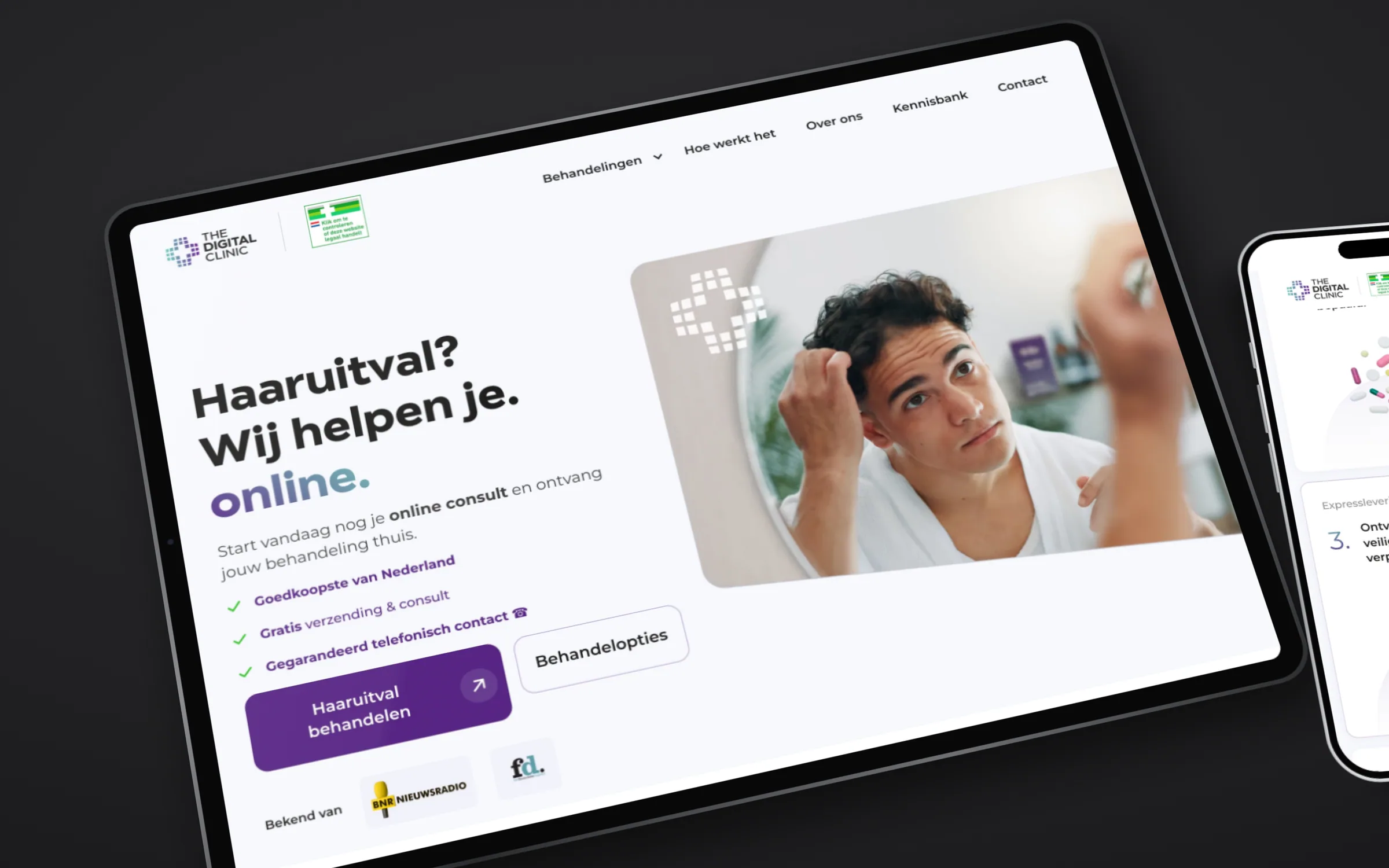
More than for an ordinary app. You are building for patients and care professionals, with high demands on usability, security and privacy. We start small, with a clickable prototype and an MVP you test with real users. Keep an eye on regulation too: if your software has a medical purpose, the MDR may apply, so have that assessed upfront. For The Digital Clinic we designed and built a platform with a portal and integrations in sprints this way.
Can a care platform connect to existing systems?
Often, yes. Care organisations work with record systems, scheduling software and measuring devices, and your platform only becomes truly useful when it talks to them. Through API integrations and, where available, healthcare standards such as FHIR, we exchange data securely. How much is possible depends on what the other party opens up. We find that out early in the project, so you do not hit a locked door halfway through.
How do I tell the story of a care innovation to professionals, insurers and investors?
Each audience wants to hear something different. Care professionals want to know if it makes their work easier, insurers look at impact and costs, investors at the market and the team. With clear positioning you nail down the core once and translate it per audience. A short explainer video, a strong pitch deck and a website with separate routes do the rest. No miracle claims, because in healthcare people see through those quickly.
How do I get care professionals to actually use my product?
By making it as easy as possible for them, because care professionals have little time and little patience for software that adds clicks. Test early with real users, cut what is not needed and make sure the first experience delivers something within a few minutes. Short in-app guidance, a few well-timed emails and a fixed point of contact help at the start. Then measure which features are really used, and improve based on that. Good UX does more here than an extra feature.
Can I use AI responsibly in a care product?
Yes, if you set it up carefully. Think of summarising reports, smarter searching through information or help with administration, with the care professional always checking and deciding. Decide upfront which data may go to a language model, where that data stays and how you explain this to users. If a feature affects diagnosis or treatment, the MDR may apply, and the European AI Act sets requirements too. With AI integrations we build it into your product, with the legal review done by your own specialist.
How long does it take to build an MVP of a care app?
An MVP or compact portal is typically live in 6 to 12 weeks, depending on the features, integrations and security requirements. In healthcare, extra time is often needed for privacy, a DPIA and testing with care professionals, and you do not want to rush that. We start with a scoping session and a clickable prototype, so you quickly have something to test or pitch with. After that we keep building in sprints based on feedback and data.
Who we work for
From independents to market leaders
- Physiotherapy practices
- Exercise therapy practices
- GP practices
- Dental practices
- Orthodontic practices
- Dental hygienists
- Dietitian practices
- Speech therapy practices
- Podiatrists
- Midwifery practices
- Health centres
- Psychology practices
- Mental health organisations
- Coaches and therapists
- Private clinics
- Cosmetic clinics
- Independent treatment centres
- Home care organisations
- Nursing and care homes
- Disability care providers
- Youth care organisations
- Care farms
- Wellbeing foundations
- E-health companies
Today may be the day to meet your strategic partner.




 Martijn, Noud and the rest of the team are ready for you.