







Transport companies, logistics service providers, warehousing, terminals, couriers and removal firms: we help you find drivers, customers and smarter processes.






















In transport and logistics everything revolves around reliability. Customers want to know where their cargo is, drivers want an employer who takes them seriously and planners want fewer emails and more overview. Yet many websites in the sector are a digital business card from a decade ago. M7 helps transport companies and logistics service providers with a brand, a website and tools that run as tightly as the planning.
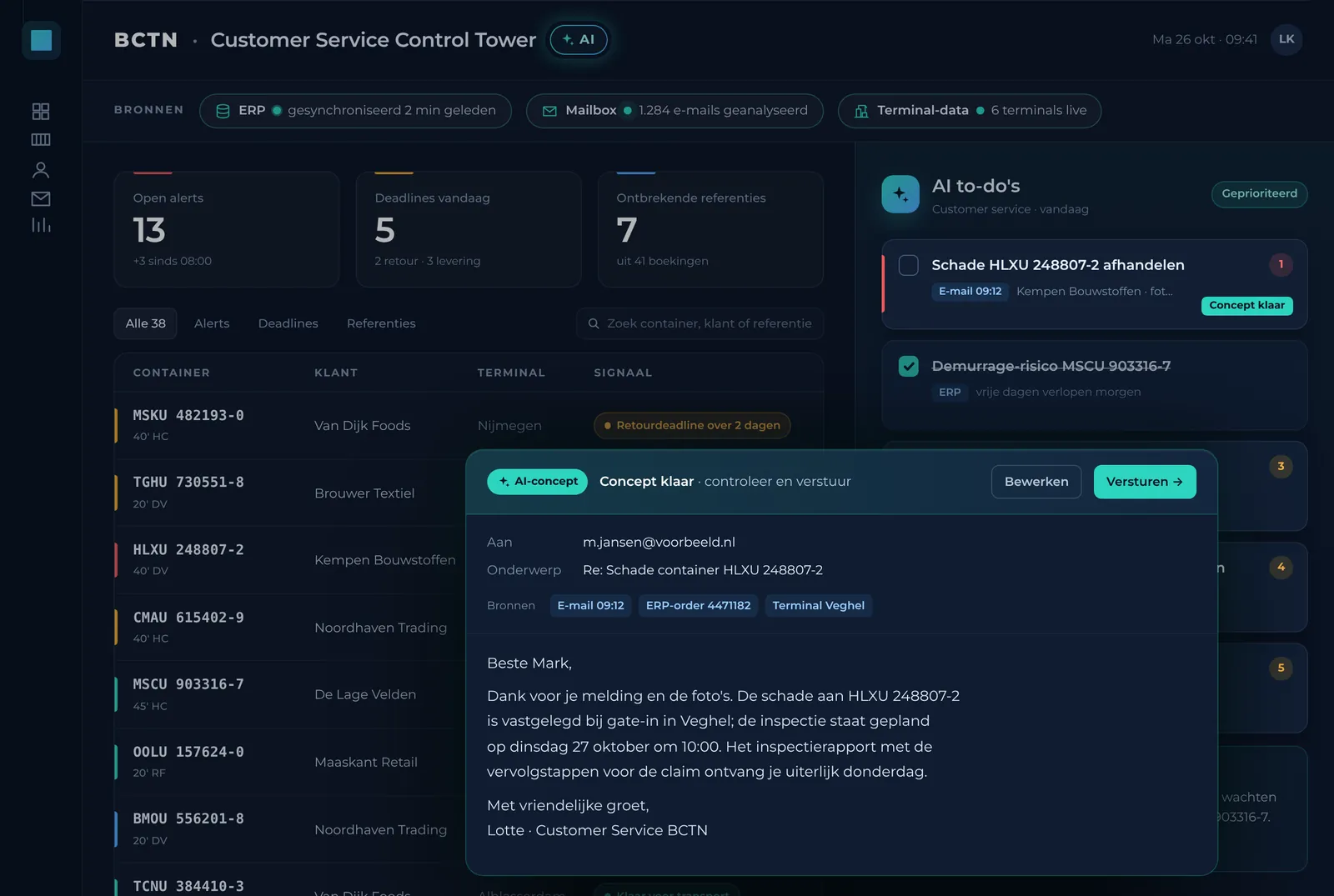
For container terminal operator BCTN we developed the concept for an AI Customer Service Control Tower: one screen that brings together the mailbox, ERP orders and terminal data, turns signals into prioritised tasks and prepares draft replies that a staff member checks and sends. We also build careers websites and recruitment campaigns for drivers and logistics staff, customer portals with order status through API integrations, and quote calculators for transport and removals.
Challenges in this sector
What we often see.
Finding drivers and staff
Vacancies for drivers, planners and order pickers often stay open for a long time. With employer branding, a careers website and targeted campaigns you also reach people who are not actively looking.
Customer service under pressure
Status questions, changes and damage reports come in by email and phone. AI and a customer portal take away the searching, so your team can focus on the exceptions.
Systems that do not talk to each other
TMS, WMS, ERP and the mailbox are often separate. With API integrations and dashboards you get one picture, without retyping.
Standing out from the rest
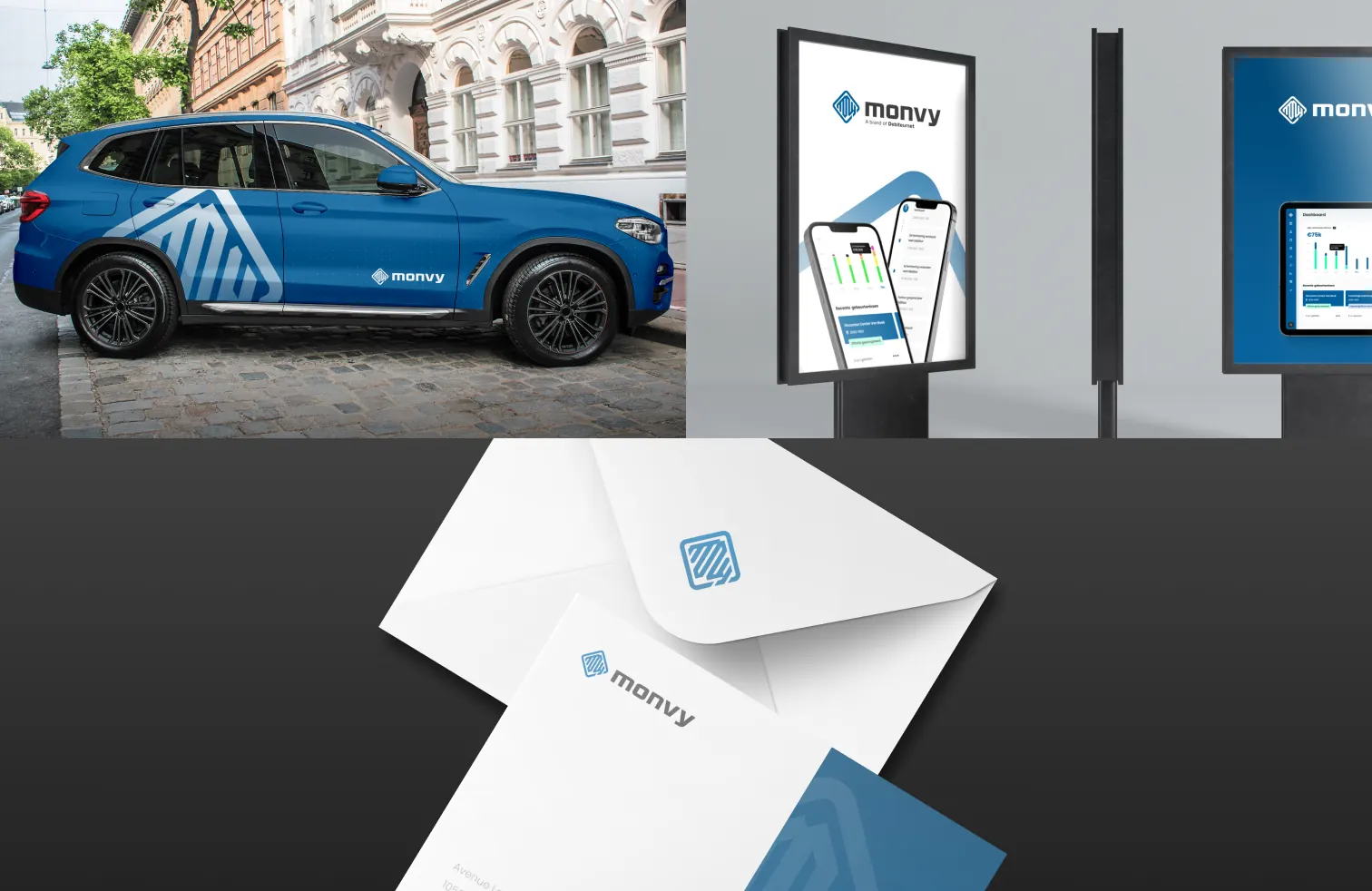
Many transport companies look alike online. A distinct brand that shows your specialism, from website to trailer, makes the difference with customers and applicants.
Projects
Work we're proud of
Relevant services
How we help
Frequently asked questions
Frequently asked
Can you build a careers website for drivers?
Yes. With real stories from colleagues, clear info about routes, schedules and equipment, and applying in a few minutes on a phone. We run targeted recruitment campaigns around it.
Can AI take pressure off our logistics customer service?
Yes, if it is set up well. For BCTN we developed the concept for an AI Customer Service Control Tower that combines email, ERP and terminal data and prepares draft replies. A staff member always checks before anything is sent.
Can customers track their shipments in a portal?
Yes. We build customer portals where customers see orders, status and documents, linked to your TMS or WMS. That saves a lot of 'where is my shipment?' emails.
Do you integrate with our TMS, WMS or ERP?
If those systems offer an API or export option, usually yes. We first map which data lives where and then build the integrations that are actually needed.
Do you also design truck graphics?
Yes. We design graphics for trucks, trailers and vans in your visual identity, so your fleet becomes a business card on wheels.
For transport companies, international hauliers, refrigerated transport and bulk and tanker transport firms that are looking for drivers and want to show customers what they are good at. Everything for road transport
What should a transport company's careers website include?
Everything a driver wants to know before calling. Is it national or international, are you home every night, what kind of truck do you drive, what does the schedule look like and roughly what do you earn? Put that on a clear vacancy page per role, with photos or video of your own equipment and colleagues. Keep applying short: name, phone number, licence, done. A vacancy page that can be read on a phone during a break works better than a PDF.
Do recruitment ads on social media work for drivers?
Often they do, because you also reach drivers who are not actively looking but are open to something new. Target the region around your depot and interests that fit the trade. Short videos of a colleague in the cab do more than a stock photo of a truck on an empty road. With Meta Ads and social video we set up that kind of campaign and measure which ads actually bring in applications.
How do you show you specialise in refrigerated or tanker transport?
By being specific. A shipper in food or chemicals is looking for a partner who knows their requirements: temperature logging, certifications, ADR and cleaning. Give each specialism its own page with those details, examples of loads and the certificates you hold. That helps in Google and with a buyer comparing suppliers. With SEO content and clear positioning you become the haulier for that one type of cargo, instead of one of many.
Do truck graphics still matter now that everything is online?
Definitely. Your trucks pass a lot of people every day, including future drivers and customers. A calm, recognisable design with your name and website stands out more than a trailer full of text. Make sure it matches your website and vacancies, so people who see you on the road recognise you online. We design vehicle graphics in your visual identity for trucks, trailers and vans, and deliver print-ready files to your sign maker.
Can AI process transport orders from emails and PDFs?
Yes, as preparation for your planners' work. AI recognises the loading and delivery addresses, dates, goods and references in an email or PDF, and prepares them as a draft order in your TMS. A planner checks and confirms, especially for unusual orders. Start with the customers who send the most orders and expand if it works well. With AI integrations and API integrations it fits into the systems you already have.
How do you let shippers track their shipments without calling?
Give them insight themselves. In a customer portal shippers see the status per shipment, the expected arrival time and documents such as the consignment note and proof of delivery. An automatic email with a link at departure and delivery makes it even easier. The data comes from your TMS and the on-board computers, so nobody has to keep anything up to date by hand. Your planners are interrupted less often and your customers know where they stand.
How do you make a good corporate film for a transport company?
With real people, real equipment and a schedule that fits around the trips. A day with a driver, footage of the workshop and the planning office, and an owner explaining in a few sentences what the company stands for. Make several versions: a longer corporate film for the website and short, vertical social videos for vacancies. That way one day of filming works for months for recruitment and sales.
For logistics service providers, warehousing and fulfilment companies and freight forwarders that want to win over shippers and web shops and connect their processes. Everything for logistics & warehousing
How does a fulfilment company attract new web shops?
By answering a web shop owner's questions straight away. Which platforms do you integrate with, how quickly does an order leave the building, what does it cost per order and how are returns handled? A price calculator based on order volume, product size and storage gives a first estimate and produces an enquiry with the right details. Show how it works with logos of your integrations and a short video of your warehouse. That makes switching feel a lot less daunting.
Can customers see their stock and orders in real time?
Yes, if your WMS can share the data. In a customer portal customers see their stock, open orders, shipping status and returns, without emailing or calling. Through API integrations the data comes straight from your systems, so nobody has to retype anything. Customers can also download documents or pre-notify a delivery themselves. That builds trust with your customers and brings calm to your customer service team.
How do shippers looking for a logistics partner find you?
Shippers often search very specifically, such as 'hazardous goods warehousing Brabant' or 'cross-docking Venlo'. Create a page for each service and specialism that answers that question, with capacity, certifications and location. That works in Google and increasingly in AI assistants too. You can also reach logistics managers and buyers well through LinkedIn. With SEO and LinkedIn Ads you build visibility with exactly those people.
How do you find order pickers and other logistics staff?
By being quick, clear and close by. People want to know what shifts there are, how far the commute is, what they will earn and what the atmosphere on the floor is like. Put that on a short vacancy page that works on a phone, in your staff's languages. With employer branding and Meta Ads in the region around your warehouse you also reach people who do not search job sites. Call applicants back the same day, because they often apply in several places.
Which administrative tasks can you automate in logistics?
More than you think. Think of reading in orders and pre-alerts, status emails to customers, gathering data for invoicing and standard reports per customer. Often it is work where someone moves data from one system to another. With workflow automation and AI agents you take that over, while your team handles the exceptions. Start with the process that takes the most time and measure what it delivers.
What should a logistics service provider's website include?
Answers for a shipper or web shop that does not know you yet. Which services do you provide, for which sectors, from which locations and with what capacity? Which certifications do you hold and which systems do you integrate with? Give each service its own page with those details and a fixed contact person. A website with an quote calculator or a short request form makes the first step small.
For container terminals, inland shipping companies, shipping lines and port companies with many parties, lots of data and a customer service that has to keep running. Everything for terminals & inland shipping
What does an AI Customer Service Control Tower do?
It brings together everything a customer service team needs: the mailbox, orders from the ERP and data from the terminals. AI reads along, spots signals such as a missing seal number or an approaching deadline, and lines them up as prioritised tasks. For common questions a draft reply is ready for a staff member to check and send. We developed this concept for BCTN. Read more about AI agents and how they fit into your processes.
How do you start with AI in the customer service of a terminal or shipping line?
Small and concrete. Pick one process that takes a lot of time and is clear-cut, such as status questions or filling in missing details. Map where the information lives and who checks what. Then build a first version in which AI prepares and a person decides. If that works, you expand. With an AI strategy and AI integrations in your existing systems you keep AI from becoming a separate toy next to the real work.
How do you show the scale of a terminal or fleet properly?
From above and up close. Drone footage shows how big a terminal is and how the flows run. Footage of the people on the quay, in the crane or on board shows who does the work. That combination works for customers, for new colleagues and for the local community. With drone video and a corporate film we create footage you can use for years on your website, in presentations and at trade shows.
How do you find crane operators, planners and skippers?
By showing the work as it is, including the shift work and the weekends. People who choose this trade want to know what equipment they will use, what the schedule looks like, what training they get and who their colleagues are. Short videos from the quay, in the crane or on board do more here than text. With employer branding and targeted campaigns in the region around the port you also reach career changers.
Can customers automatically get status updates about their containers?
Yes, if the data is available in your terminal or order system. Through API integrations you retrieve the status, and with automated flows you send a message at fixed moments: arrival, delay, release or ready for pick-up. Customers choose whether they see that by email or in a portal. That reduces the number of status questions and gives your customer service time for the exceptions.
How do you tell shippers the story of transport by water?
Concretely and without exaggeration. A shipper wants to know which connections there are, how long a container is in transit, how pre- and on-carriage are arranged and what it means for their emissions. Only use figures you can back up. A map of connections and a few examples of loads make it tangible. With a clear content strategy and LinkedIn Ads you reach the logistics managers who still send everything by road.
For courier services, same-day couriers, last-mile delivery firms, removal companies and self-storage businesses that need to be found fast and want to schedule requests straight away. Everything for couriers & removals
How does a removal company get more quote requests online?
By making requests easy and concrete. A removals calculator where the customer enters home type, number of rooms, floor, distance and extras such as packing or a furniture lift gives an estimate straight away. You get an enquiry with everything you need, without calling first for the basics. Combine that with reviews, photos of your own team and equipment, and clear pages per region. Then a customer chooses trust, not just the lowest price.
How does a courier get found for 'same-day courier' in their region?
With speed in everything. A page per town or region that immediately says how quickly you can collect, a phone number at the top and a form that takes a minute to fill in. A strong Google Business Profile with reviews helps in Google Maps. For truly urgent requests Google Ads works well, because you appear exactly at the moment of searching. With local SEO you also build visibility you do not pay for per click.
Can customers book a delivery, moving date or storage unit online?
Yes. With a booking widget customers choose a date or time slot, enter addresses and details and, if you like, pay a deposit straight away. For self-storage that works per unit size, with availability and rental period. Confirmations and reminders go out automatically, and the booking lands in your planning. That way you only pick up the phone for the questions that really need a conversation.
How does a courier attract regular business customers?
By showing you understand what they need. A laboratory, garage or web shop has different requirements from a private customer: fixed pick-up times, urgent runs, careful handling or proof of delivery. Give those sectors their own page and make requesting a business account easy. A customer portal with an overview of trips and invoices makes you a regular partner. With LinkedIn Ads and local SEO you reach businesses in your region.
How do you fill self-storage units through the website?
Make choosing and reserving easy. Many people do not know how much space they need, so a size guide with examples like 'fits the contents of a studio flat' helps a lot. Show availability and price per unit size, and let customers reserve online with a booking widget. With local SEO you get found for 'storage unit rental' plus your town, and Google Ads catches the people who need it tomorrow.
How does a removal company show it is reliable?
By being transparent and showing your own people. Photos of your team, vans and equipment say more than stock images. Explain how a move goes, from the survey to the unpacking, and what you do if something gets damaged. If you are a member of a quality mark or trade association, show it. A recognisable visual identity on vans and clothing and a clear website complete the picture.
For truck and trailer rental companies, commercial vehicle leasing companies, fleet management firms and telematics providers that help transport companies with equipment and insight. Everything for fleet & leasing
How do you explain a fleet management or telematics platform clearly?
Show the screen and explain what it solves. A fleet manager wants to know what it saves them: less searching for paperwork, spotting earlier when maintenance is due, fewer empty kilometres. A short demo video or an interactive tour of the platform says more than a list of features. If the platform itself is hard to use, a critical look at the UX/UI helps. With motion design you turn a dashboard into a story.
Can a customer rent a truck, trailer or van online themselves?
Yes. In an online booking flow the customer chooses the type of equipment, the period and extras such as insurance or a refrigeration unit, and immediately sees availability and price. They reserve, pay a deposit and receive a confirmation with the practical info for collection. With a booking widget linked to your rental system the planning stays correct, even when bookings also come in by phone.
How do you reach fleet managers and buyers at transport companies?
Through the channels where they are active professionally, with content that answers their questions. On LinkedIn you reach buyers and fleet managers by job title and industry. Share practical knowledge, such as leasing versus buying or the switch to electric trucks, rather than only offers. Offer something useful, like a checklist, and follow up interested people with relevant emails. With LinkedIn Ads and lead nurturing you build a solid pipeline that way.
How do you make a telematics platform or fleet dashboard user-friendly?
Start with the user's daily tasks, not with all the data you have. A planner wants to see which vehicles need attention, a fleet manager wants costs and maintenance per period. Put exceptions at the top, keep the rest one click away and make sure it works on a tablet or phone too. Test with real users before you build further. With good UX/UI design a dashboard becomes something people open every day.
How do you make sure leasing customers renew in time?
By being in view before your competitor. A CRM that flags when a contract ends in a few months gives your account manager time to prepare a fitting proposal. With lead nurturing you send customers useful information in the run-up, for example about new models or the switch to electric. In a customer portal they see their own contract terms. That makes renewing a logical step, not a last-minute negotiation.
What should content about electric commercial vehicles cover?
The practical questions a fleet manager actually has. How far do you get in practice, with a load and in winter? Where and how do you charge, at the depot and on the road? What do zero-emission zones in cities mean for your trips, and how do you compare costs over the full term? Be honest about the limitations. With SEO content and GEO you get found for those questions, in Google and in AI assistants.
Who we work for
From independents to market leaders
- Transport companies
- International hauliers
- Refrigerated transport companies
- Bulk and tanker transport companies
- Heavy haulage companies
- Logistics service providers
- Warehousing companies
- Fulfilment companies
- Freight forwarders
- Customs brokers
- Container terminals
- Inland shipping companies
- Shipping lines
- Port companies
- Courier services
- Same-day couriers
- Last-mile delivery companies
- Removal companies
- Self-storage companies
- Truck and trailer rental companies
- Commercial vehicle leasing companies
- Fleet management companies
- Telematics providers
Today may be the day to meet your strategic partner.




 Martijn, Noud and the rest of the team are ready for you.